
What Russian occupation really means for Ukrainians
When politicians discuss occupied territories during peace negotiations, they speak as if these are empty spaces. But millions of Ukrainians live there. These people are caught in a gray zone with no tools to defend their rights, freedom, property, lives, children, or loved ones.
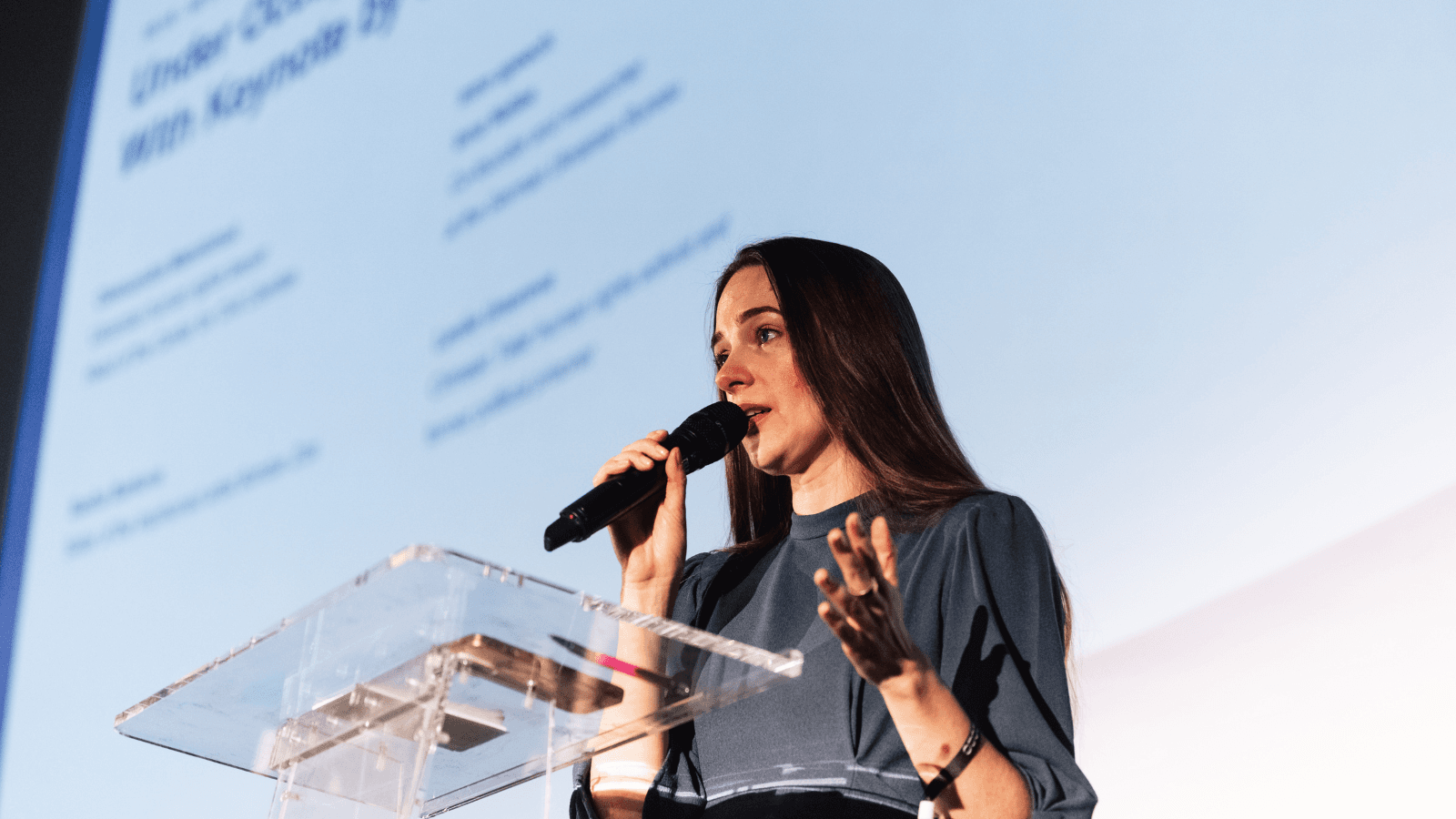
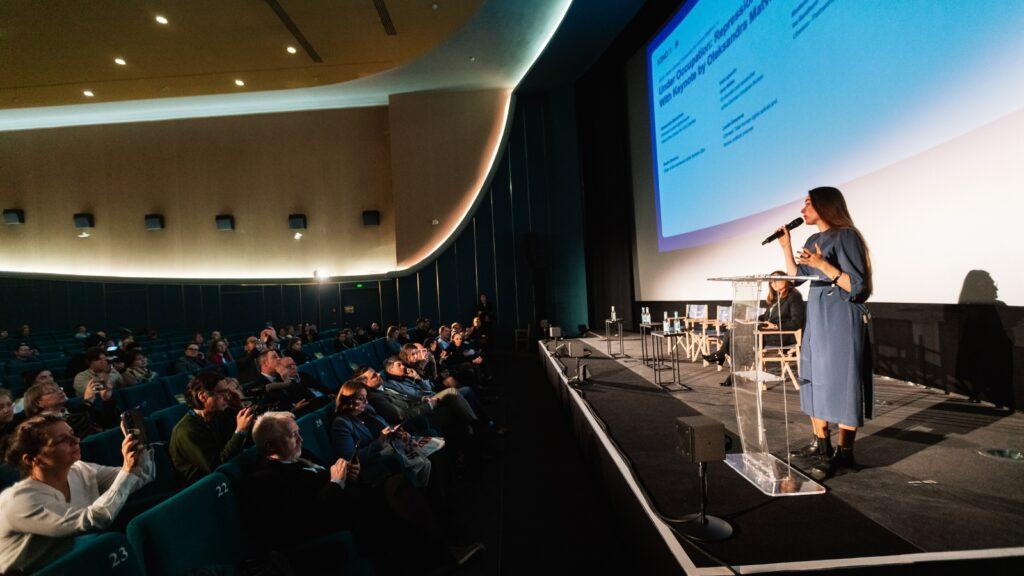
Oleksandra Matviichuk
Ukrainian human rights lawyer and the head of the Center for Civil Liberties.
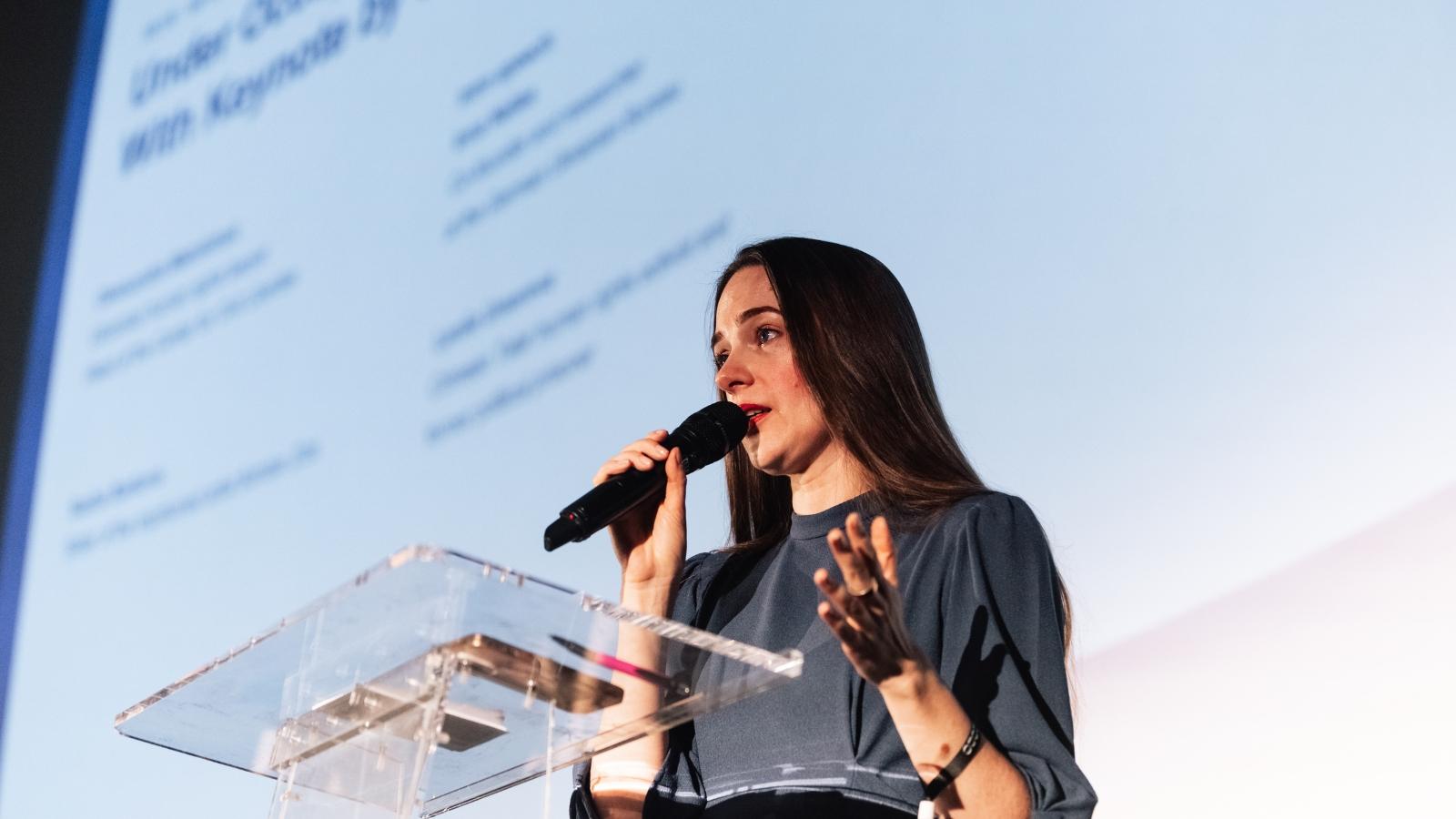
It’s the fourth winter of the full-scale invasion, and it’s very difficult. People in Ukraine find themselves between two parallel realities that don’t match. On one side, there are international meetings in Miami, Abu Dhabi, Geneva, and Washington, trying to convince us that we are on the path to peace. But the reality in Kyiv and other Ukrainian cities tells a different story. Russia is destroying the energy grid, the very infrastructure that civilians depend on for their survival. Millions of people are literally freezing in their homes without heat, water, and electricity. And the main question is: how did Trump’s “year of negotiations” become the deadliest year for civilians in Ukraine since the full-scale invasion began?
This is an obvious sign we’re not moving in the right direction. And I will tell you why.
We have lost the human dimension — and it’s very visible.
When politicians discuss occupied territories during peace negotiations, they speak as if these are empty spaces. But millions of Ukrainians live there. These people are caught in a gray zone with no tools to defend their rights, freedom, property, lives, children, or loved ones.
Russian occupation isn’t just changing one state flag for another. Russian occupation means enforced disappearances, torture, rape, denial of identity, forced adoption of children, filtration camps, and mass graves. This is Russian occupation.
We’ve been documenting war crimes since Russia launched this war against Ukraine.
And this war has started not in February 2022, but in February 2014. Territories like Crimea and parts of eastern regions in Ukraine have been occupied for 12 years, and we see the same war crimes playbook everywhere.
Total militarization: Russia transforms these territories into military bases for future offensives. Total attack on human rights and freedoms through terror — war against civilians to maintain control. Forced population replacement through colonization, with massive influxes of Russian citizens. In 2014, this took years. Now, it takes months. Russia is skilled and implements this war crimes playbook much more rapidly.
Ukrainians know this war has a genocidal character. Putin openly says that there is no Ukrainian nation, no Ukrainian language, and no Ukrainian culture. For 12 years, we have been documenting how these words become horrific practice in occupied territories: physical extermination of active local people (mayors, journalists, children’s writers, musicians, teachers, priests, environmentalists); banning Ukrainian language and culture; destroying and looting cultural heritage; forcibly recruiting Ukrainian men into the Russian army; taking Ukrainian children to Russia, placing them in re-education camps, telling them “you’re not Ukrainian, you’re Russian – your parents abandoned you, Russian families will adopt and raise you as Russians.”
So let me assure you, people in Ukraine dream about peace, but peace doesn’t come when the country that was invaded stops resisting. If Ukrainians stop resisting and Russia occupies the whole country, we will cease to exist. It’s tragic that politicians have lost the human dimension in these peace negotiations. Peace talks should solve urgent humanitarian problems.
Gallery
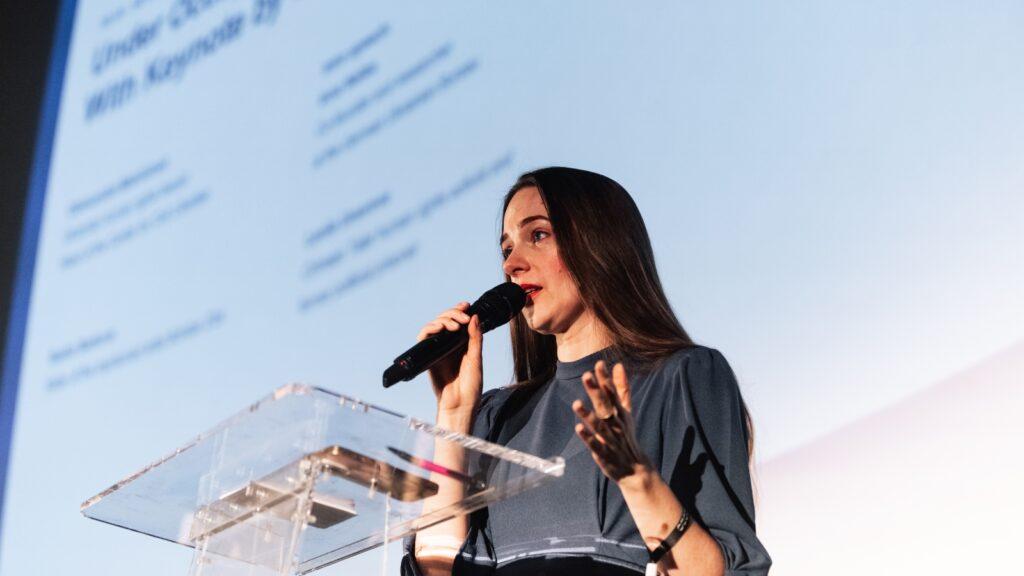
Several key issues:
Children in the occupied territories: 1.6 million Ukrainian children face identity erasure. Ukrainian language is prohibited. They study from Russian textbooks where Ukraine doesn’t exist as a state. Total militarization starts in kindergarten — parents forced to send children to camps where they live in barracks, wear military uniforms, and learn to use weapons. Russia literally is creating a new generation of Putin’s soldiers from these 1.6 million Ukrainian children.
This isn’t just a human rights issue — it’s a security threat. Because when these children turn 14, they receive Russian passports; at 18, they’ll be forcibly recruited into the Russian army. This means that these Ukrainian children with destroyed identity, fully militarized, will fight and die wherever Russia sends them to fight and die.
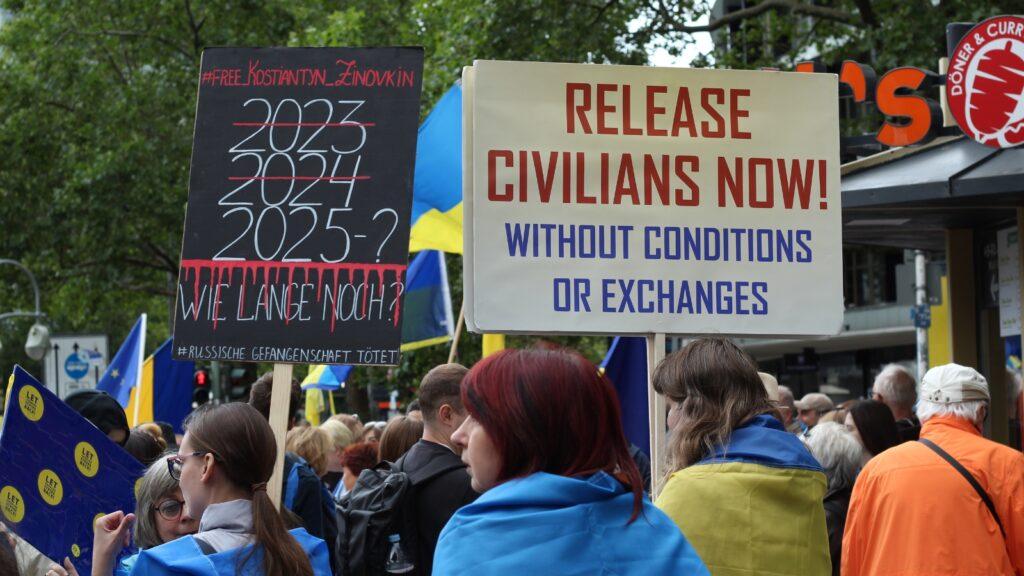
Illegal civilian detentions: Russia has no right under international law to detain civilians, yet dozens of thousands of Ukrainian civilians from occupied territories are illegally detained, subjected to horrible tortures and sexual abuse daily.
I’ve interviewed hundreds of survivors from Russian captivity. They describe being beaten, raped, locked in wooden boxes, having fingers cut off, nails ripped out or drilled, electrocuted through genitalia. One woman told me her eye was gouged out with a spoon. These people literally die in Russian prisons.
Ukrainian illegally detained civilians must be released. And I’m very grateful to all people in Germany and other countries, who joined the Center for Civil Liberties global action “People are key!”. The aim of this action is to remind politicians that they have to return the human dimension to the political process. And to insist on the release of all illegally detained civilians, prisoners of war, and political prisoners as well as the return of all forcibly deported children.
My friend, a Ukrainian journalist from an occupied city, shared this story. In her school (like in all schools under occupation), Ukrainian children start mornings singing the Russian anthem. One child didn’t sing. The teacher asked why. The child replied, “I don’t know the words.” The teacher said, “Go home, memorize it.” The next day, the teacher made the child stand in front of the class and sing the Russian anthem.
But instead, the child sang the Ukrainian national anthem.
This story is so important to me because it reminds us that even when alone with the occupiers, Ukrainian children find courage and strength to resist — we, as adults, have no moral right to say we can do nothing. We must save them. We need Germany’s strong voice to restore the human dimension.
From

Oleksandra Matviichuk
Ukrainian human rights lawyer and the head of the Center for Civil Liberties.
Oleksandra Matviichuk is a Ukrainian human rights lawyer and the head of the Center for Civil Liberties. She has extensive experience in strengthening civil society, advancing human rights, and documenting human rights violations in the context of armed conflict. In 2022, she and the Center for Civil Liberties were awarded the Nobel Peace Prize.