
Reading Belarus
What would be the first thing that would come to mind thinking of “Belarus”? Would it be potatoes, repression and dictatorship? If so, it’s hardly surprising, for if news makes it out of the country, it’s mostly bad. But what if I told you that there’s a lot more to discover about the country and its people?
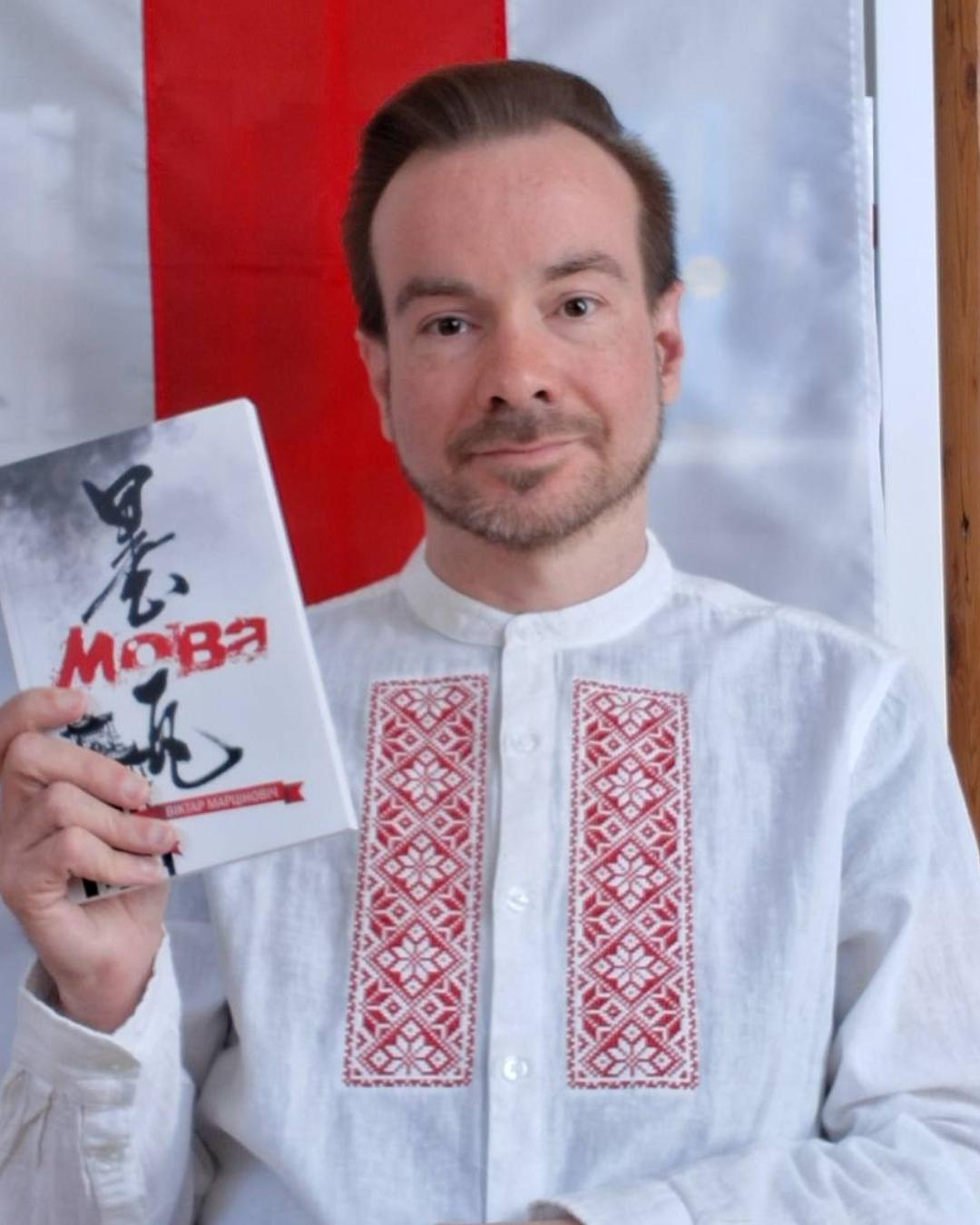
Thomas Brennecke
LIBERECO Volunteer
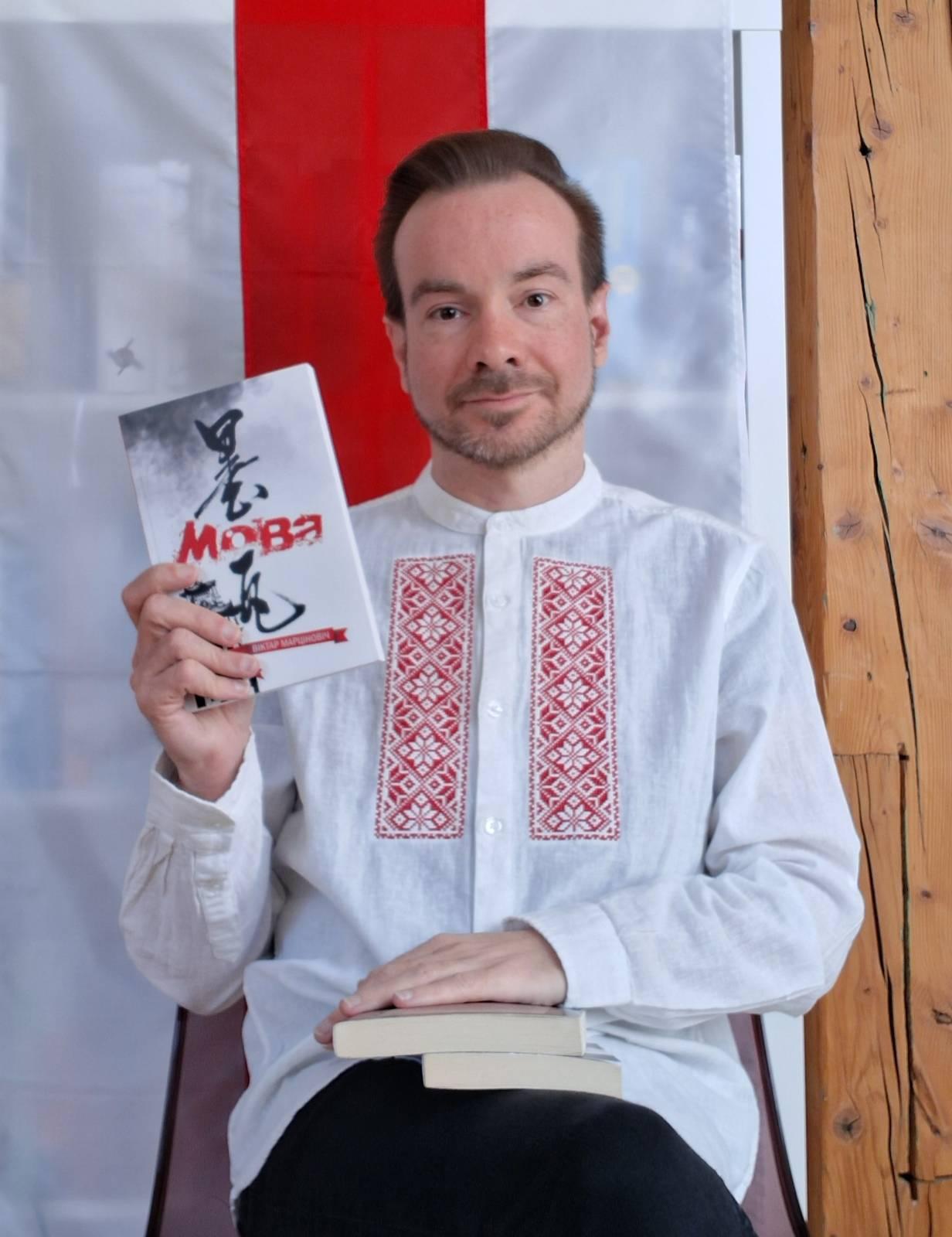
Like linguistic whimsicalities such as the word “bulbasrach” (бульбасрач) which describes a heated online debate between Belarusians. Or the fact that the people at the protests in 2020 took off their shoes before stepping on benches. Or that the team around Sviatlana Tsikhanouskaya, Veranika Tsapkala, and Maria Kalesnikava used a simple heart-shaped gesture as their election campaign slogan. How do I know this? Simple: From books (and from my friends who recommended those same books to me). And these books are not only available in Russian or Belarusian. Many of the works of great Belarusian authors have already been translated into English and other languages as well. I am thinking of Vasil Bykaŭ, Ales Bialiatski, and Victor Martinovich, the latter of whom wrote the novel “Mova” (Мова).
“Mova” by Victor Martinovich
And this is exactly the book I would recommend you to read if you wanted to learn more about the Belarusian spirit. Why? Because, in my humble opinion, the characters in the book are the perfect mirror for the diversity of life in and outside of Belarus. For one, there’s Sergey, who, in a not-so-distant future, is “dealing” with content in Belarusian and other languages around Minsk, which – together with the entirety of Belarus and other parts of the world – has been usurped by the union state formed by Russia and China. He has adapted to this reality and does not ask questions. He just wants to earn some extra money and doesn’t want to know what the stuff he’s selling does to his customers or why they are so keen on obtaining it, for knowledge can be very dangerous in this police state he is living in.
Then there’s the Junkie, whose name we never get to know. He reads content in other languages, even if he doesn’t understand anything, just to escape the intellectually bleak reality inside the Russian-Chinese union state, a reality he despises but still subordinates to because he has to. We also have the character of Alaiza, also known as “Aunt”, who takes Sergey – him of all people, who does not care to know anything – under her wings and opens his eyes to what he is actually selling to his customers. She gathered the courage to build an entire resistance – or, according to the police state authorities, an illegal smuggling ring – to lead her fellow Belarusians out of their ignorance and lethargy. And it is her character that combines the empathy and courage that I associate with the Belarusian people, just as much as their curiosity and their kindness. What she is to her people in the Russian-Chinese police state, my Belarusian friends are to me for they have open-heartedly shared their literature with me and in doing so handed me the key to discover their native culture. That is why I would recommend this book to anyone wanting to learn more about Belarus and its people. It may be set in a dystopian future, but it’s more than relevant to our own times today, because in the end, it’s all about protecting your very home along with your native language.
So why do I consider this book to be ideal for people who just started their journey to discover Belarus?
Because in their lack of knowledge, the reader is very similar to the main characters (Sergey and the Junkie). As they grew up in a police state, they did not get to enjoy any sort of comprehensive education and will commit quite some blunders throughout the story. However, the author uses footnotes to explain to the reader what the main characters are getting wrong and these provide an excellent basis for further research. This alone makes this masterpiece by Victor Martinovich the perfect introduction to the general topic of Belarus. And on top of that you’ll get a compelling story set in an incredibly elaborate world. So, if you are looking for an immersive story with interesting and relatable characters that will simultaneously teach you about Belarus and its people, “Mova” is definitely for you!
P.S.: Currently, “Mova” is only available in Belarusian, Russian, and German. It has not yet been translated into English. But if you’d like to gain an even deeper understanding, start learning Belarusian. It’s worth it, trust me.
If this made you want to read more books by Belarusian authors, here’s a list of books in different translations for you:
- Alice Bota: “Die Frauen von Belarus: Von Revolution, Mut und dem langen Weg zur Freiheit” (2022)
“Die Zeit” correspondent tells stories of three Belarusian women who became protest symbols. - “Wenn du durch die Hölle gehst, dann geh weiter” (2023)
Collection of letters from Belarusian women political prisoners. - Andrew Wilson: “Belarus: The Last European Dictatorship”
Updated editions cover political history from 1991, including 2020 protests. - “Belarus! Das Land, das nach Freiheit schreit” (bpb)
Overview of Belarus’s socio-political situation and protest movement. - Heinrich Kirschbaum: “Revolution der Geduld: Eine belarussische Bricolage” Analysis of Belarusian protest dynamics.
- Vitali Alekseenok: “Die weißen Tage von Minsk”
Belarusian conductor’s personal account of Minsk’s 2020 protest atmosphere. - Viktoryia Andrukovič & Carsten Görig: “Aufgewachsen in der letzten Diktatur Europas”
Belarusian human rights defender shares life under authoritarianism and fight for democracy. - Ingo Petz: “Rasender Stillstand”
Analysis of protest movement origins and regime survival with Putin support. - Paul Hansbury: “Belarus in Crisis: From Domestic Unrest to the Russia-Ukraine War”
Examines Belarus from 2020 protests to its role in Russia-Ukraine war. - Elena Korosteleva: “Contemporary Belarus: Between Democracy and Dictatorship” tudy of Belarus’s political system between democratic aspirations and dictatorship.
From

Thomas Brennecke
LIBERECO Volunteer