
Evacuation as a chance to restore faith that everything will be alright
How medical evacuations take place, the fears people face, why many delay the decision to leave, and how support and care can help restore their hope for the future.
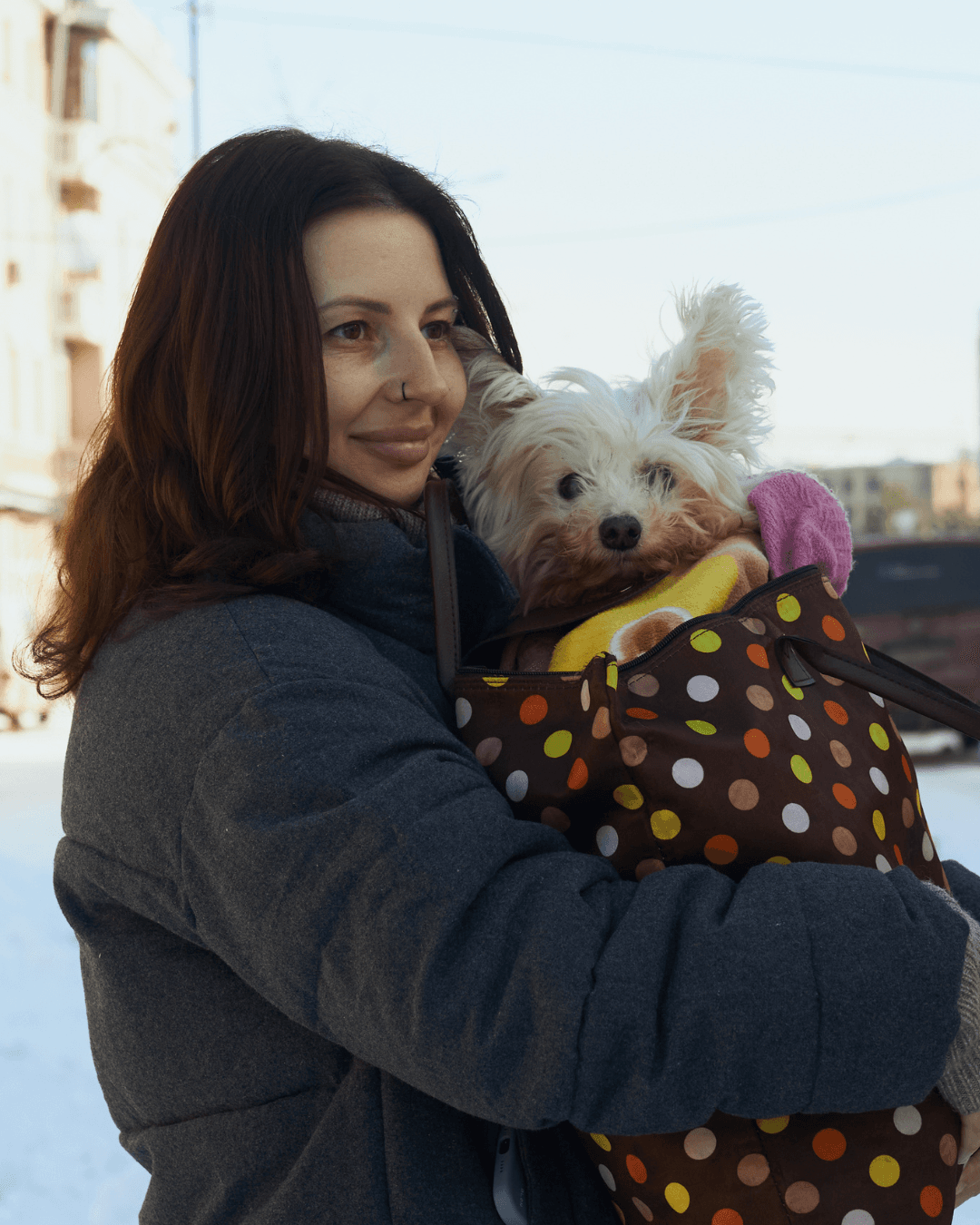
Tetiana Fiial
Paramedic at the charitable foundation “Angels of Salvation”
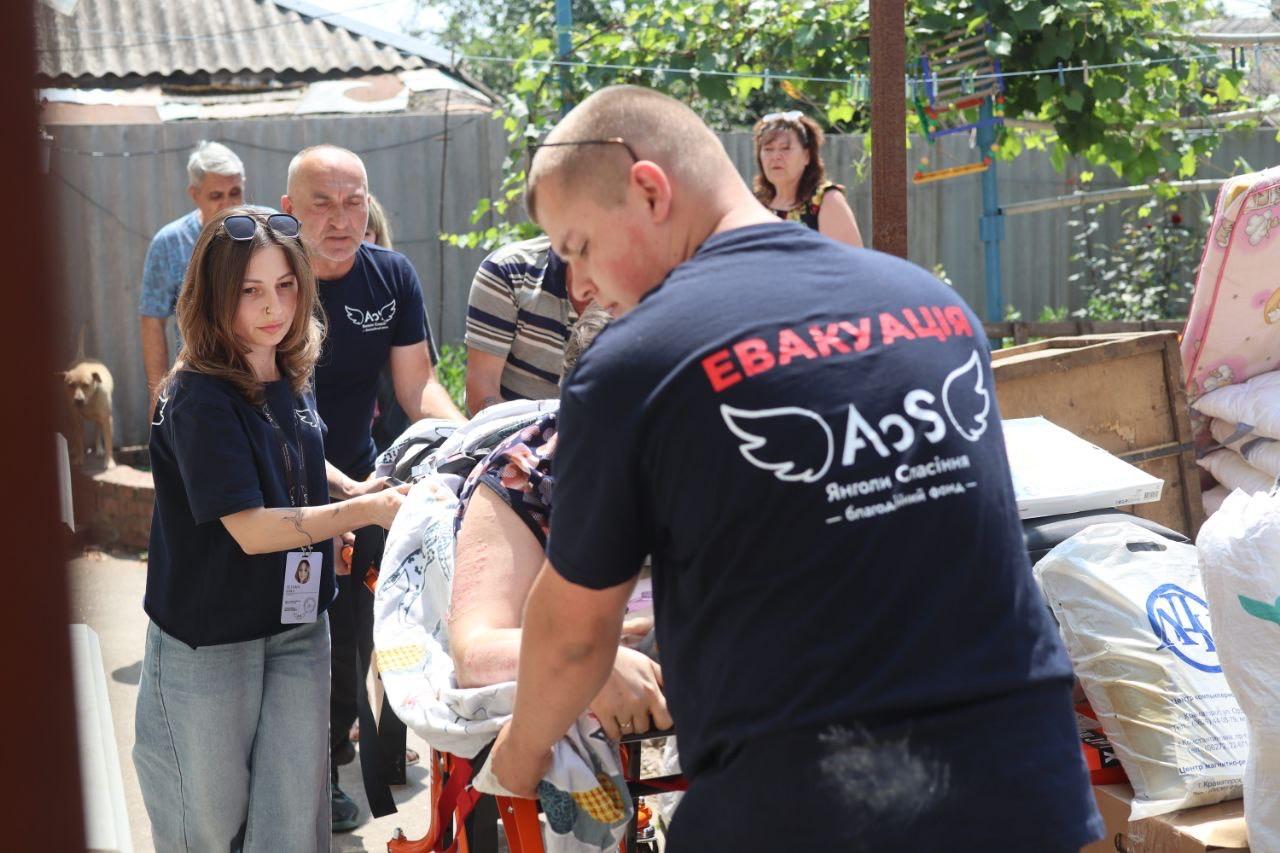
My name is Tetiana Fiial, and I am a paramedic with the Charitable Foundation “Angels of Salvation”. Every day I accompany the evacuation of people with limited mobility from front-line areas. In this blog, I share my experience of being forced to leave my home, returning to Ukraine, and deciding to help others during the most difficult moments of their lives.
I was born in the town of Velyka Snytivka in Kyiv region. In 2010, I moved to the settlement of Volodarka, also in Kyiv region. My son and I lived there until 2022. When the full-scale war began, the decision was made to evacuate — my sister strongly insisted on it. At first, we left for Ternopil region, where the local authorities accommodated us in fairly comfortable conditions. Later, we decided to go to Poland. There, volunteers helped us and found an apartment where we were able to stay.
I can say that I have gone through the same journey as the people we are now helping to evacuate to safer places. Throughout that entire time, we constantly received support. Before the war, I worked as a paramedic in emergency medical services for ten years, so when we evacuated it felt unusual to be the one receiving help, as I had always been the one providing it.
In 2023, we decided to return to Ukraine, and I realised that I could make my own contribution by helping people as a volunteer paramedic.
I joined the Charitable Foundation “Angels of Salvation” a year ago. As a paramedic, I accompany people with limited mobility during evacuations from towns and villages located close to the front line in Dnipropetrovsk and Donetsk regions.
Evacuations for residents are completely free of charge thanks to cooperation with LIBERECO – Partnership for Human Rights.
People who wish to evacuate call the Charitable Foundation’s hotline and submit a request. After that, our team contacts them to coordinate the evacuation and gather any additional information that may be needed during the journey.
Our ambulances are equipped with the specific needs of people with limited mobility in mind. Before each mission, we always clarify all important details and medical information. If someone needs help getting down from an upper floor or reaching the vehicle, we always find a way to assist.
In the ambulance, there is a stretcher that allows a person to remain comfortable in any position — sitting or lying down. A lifting mechanism is used to load it safely into the vehicle. The ambulance is also equipped with an additional safety belt to ensure proper stabilisation during difficult sections of the road or in case of emergency braking.
Gallery
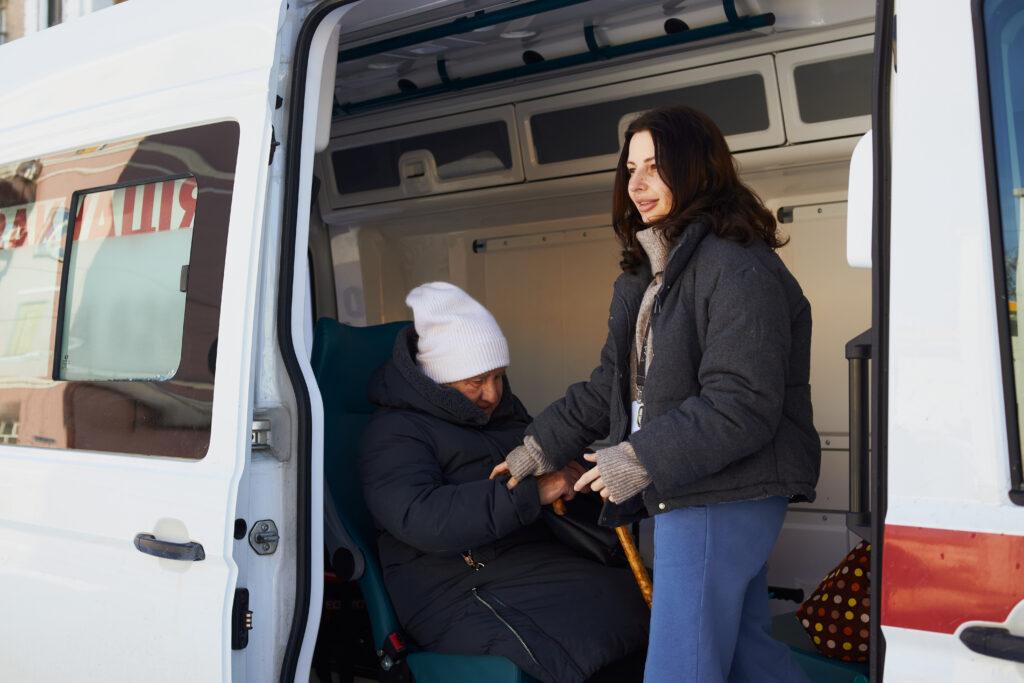
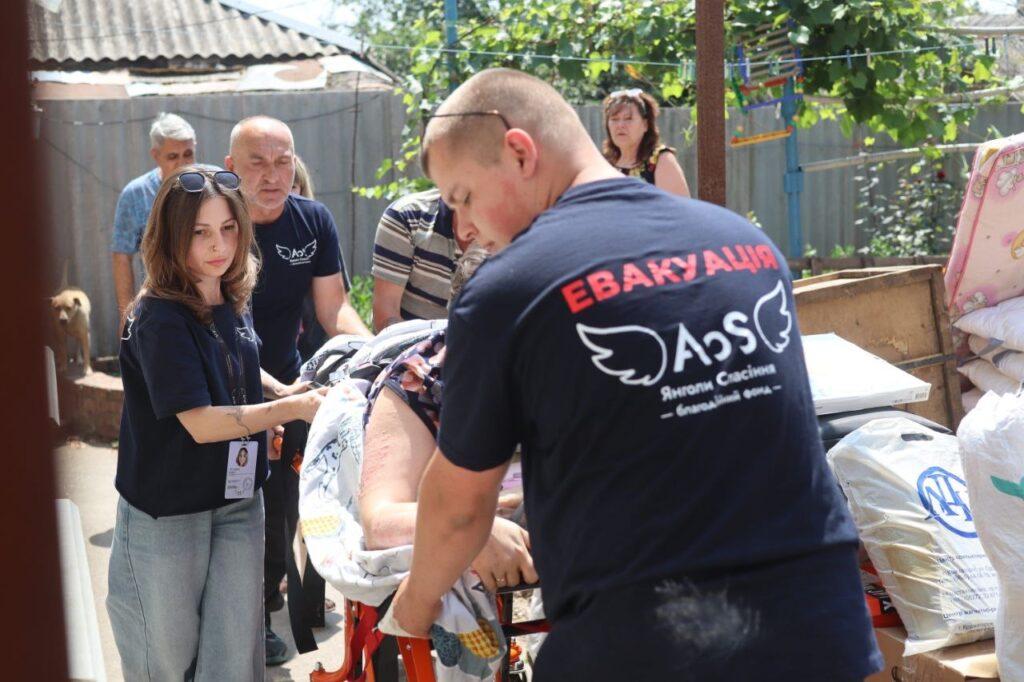
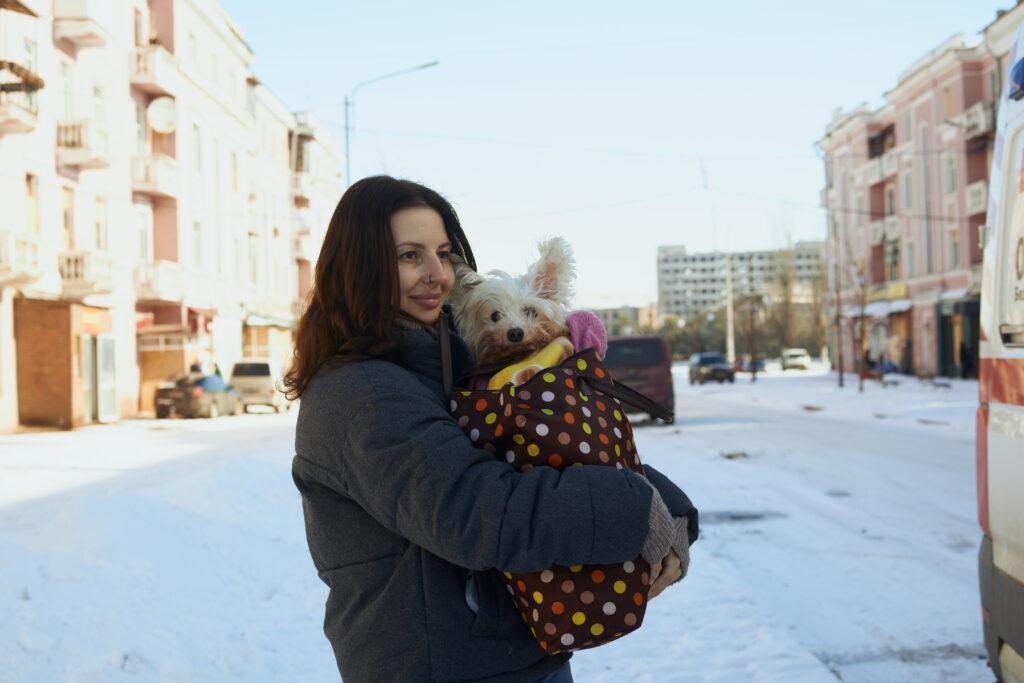

During the evacuation, I provide full support. I help people leave their homes and settle into the vehicle, carry their belongings and load them into the ambulance. Throughout the journey, I closely monitor their physical condition. For example, if a person has diabetes, I check their blood glucose levels. If someone experiences motion sickness, we have medication available and can stop so they can get some fresh air. I carefully observe their wellbeing to be ready to assist whenever needed.
I care not only about people’s physical condition but also about their emotional comfort.
It is important to me that a person feels safe and comfortable, without anxiety or fear about expressing their needs. I listen attentively, offer reassurance and try to share their worries. I help them hold on to hope — that this is not the end, but a stage we are overcoming together.
The final destination of an evacuation is always different. We take people wherever they need to go — to relatives and loved ones, or to temporary accommodation facilities that are equipped in accordance with accessibility requirements. Sometimes we transfer them to another ambulance so they can continue their journey.
Every person has a unique story. One that stays with me the most happened in the spring of 2025. A man from Kostiantynivka in Donetsk region contacted us. The city is located quite close to the front line, and the security situation there was deteriorating rapidly. He had been looking for an opportunity to leave for a long time. When we finally arrived to evacuate him, he was very happy that he could leave — travelling separately, in comfort, and with support. The most remarkable thing was that his physical condition improved with every kilometre we travelled. As he began to feel safer, his anxiety faded and he realised that everything would be alright.
Because of uncertainty about the future, people with limited mobility often hesitate and delay the decision to evacuate. This is why we began conducting evacuation awareness activities in communities in Dnipropetrovsk region that are located close to the front line. Right now, the most important thing is to provide timely support and show people that they will not be left alone with their problems.
For me, it is an honour to work as a paramedic.
I am grateful for the opportunity to help people and give them hope for a better future — so they can continue living and regain their belief that everything will be alright.
From

Tetiana Fiial
Paramedic at the charitable foundation “Angels of Salvation”