
30 Years of Viasna – 40 Years Since Chernobyl: What a Nuclear Disaster Has to Do with Human Rights
When it comes to human rights work in Belarus, the Human Rights Centre Viasna is an indispensable part of the landscape. As the 40th anniversary of the Chernobyl disaster approaches, Viasna is celebrating its own 30th anniversary. This is no mere coincidence...

Florian Wiedemann
Program Manager Belarus
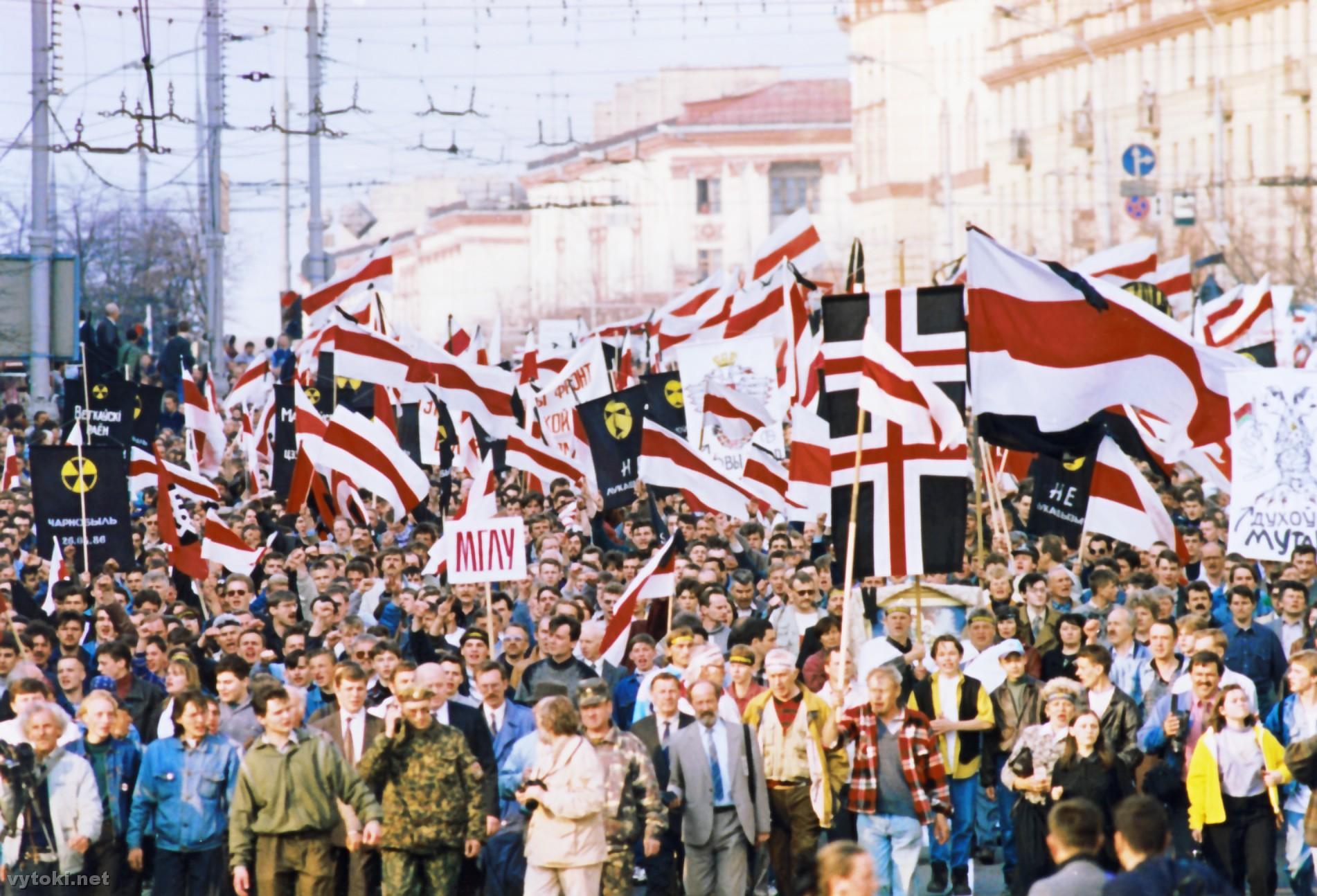
Forty years ago, on 26 April 1986, the Chernobyl disaster began (ukr. Chornobyl / bel. Charnobyl). During a routine safety test, operators simulated a power cut to check the automatic emergency cooling system. A series of technical and human errors, however, triggered an uncontrollable nuclear chain reaction in the reactor core. The resulting explosion destroyed the entire power station and sent highly radioactive material flying into the surrounding area. The fire that followed burned for days, releasing vast quantities of radioactive particles that spread across half of Europe.
Around 70% of the radioactive fallout landed on what is now Belarusian territory, contaminating roughly a quarter of the country and affecting 2.2 million people. The disaster struck at a moment of deep socio-political upheaval in the Byelorussian Soviet Socialist Republic. Secrecy, official cover-ups, and political failures intensified an already profound loss of trust in the socialist regime, a discontent that culminated in a mass demonstration in 1989, known as the “Chernobyl Way” (Charnobylski schlyakh).
The Birth of Viasna
Thirty years ago, on 26 April 1996, the Belarusian Human Rights Centre “Viasna” (Belarusian for “spring”) was founded. The human rights situation in Belarus was dire; Lukashenko had already consolidated power and was relentlessly tightening his grip on the country.
To mark the tenth anniversary of the Chernobyl disaster, the Chernobyl March was revived. As before, the demonstration was not only about Chernobyl. It also served as a protest against Lukashenko’s rule and opposition to the proposed union with Russia. One of the co-organisers was Ales Bialiatski, who witnessed firsthand how security forces violently dispersed the crowd and arrested demonstrators. He later recalled:
For me, this police attack on peaceful demonstrators was a shock. Since 1988 […] the police avoided using brutal violence against demonstrators… And after seven years of a moratorium on violence, it begun. The psychological barrier that had kept the security forces from violence all those years was broken.
Gallery
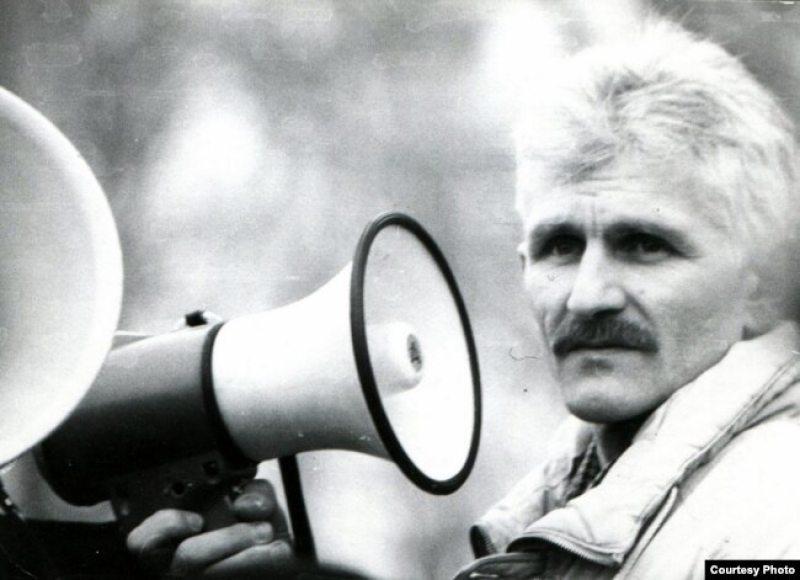
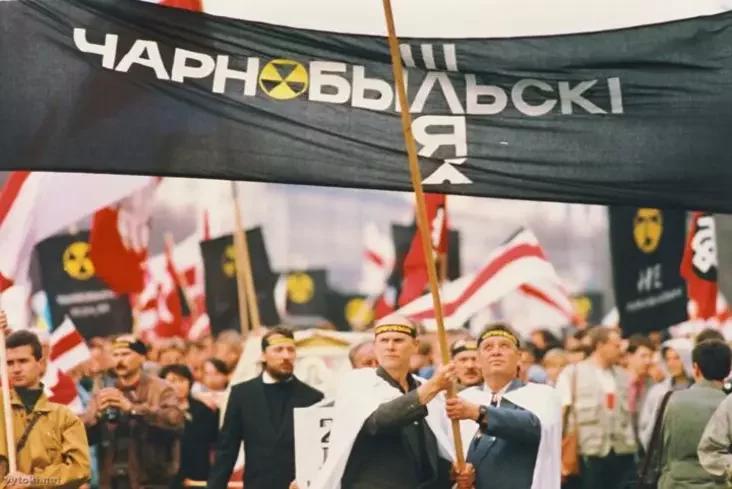
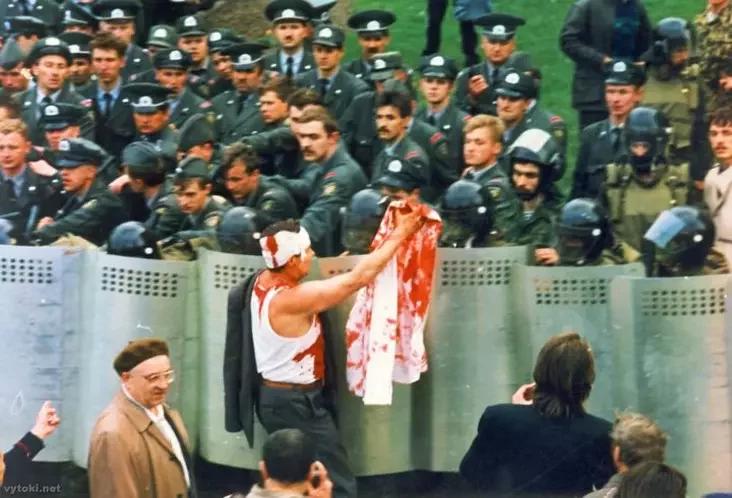
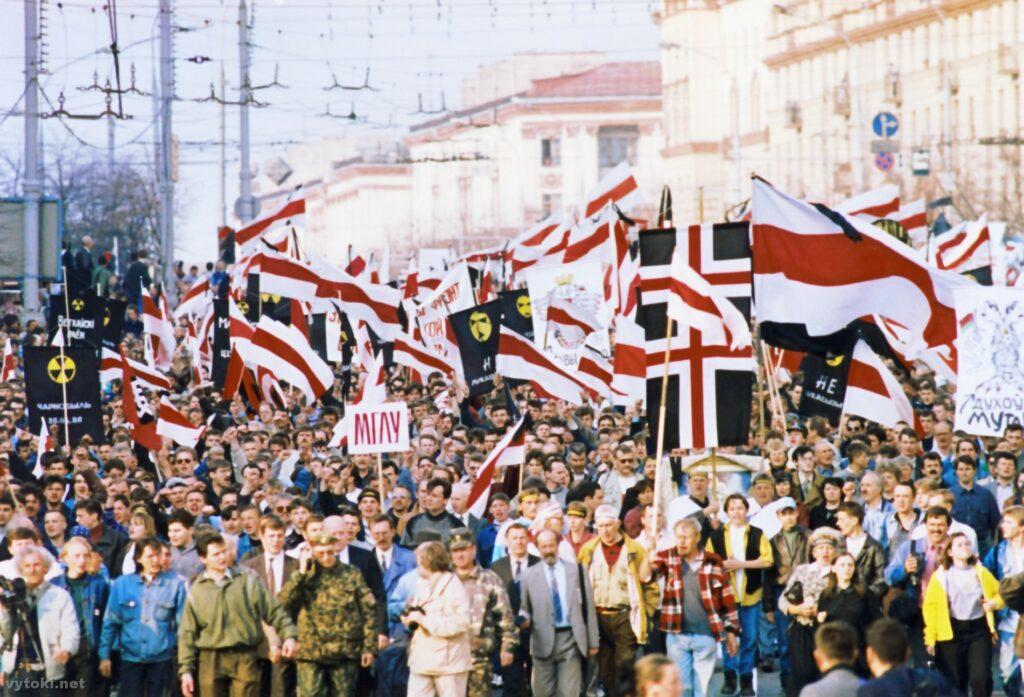
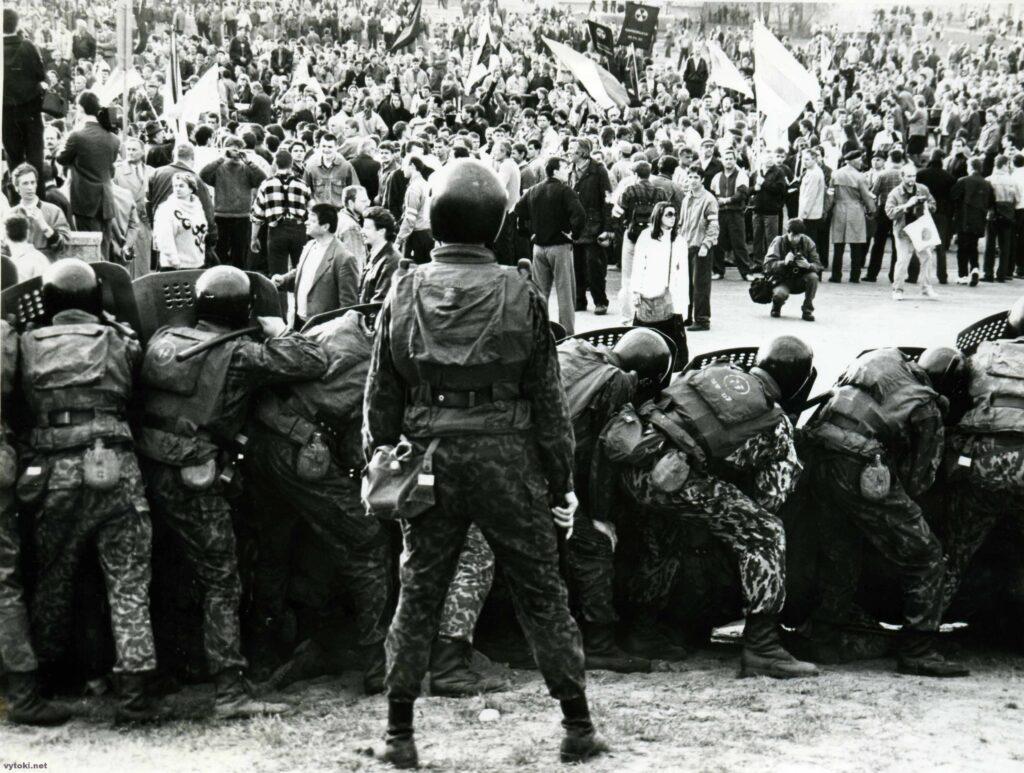
That moment proved to be a turning point. Ales and his fellow activists packed food into bags, brought them to the notorious detention centre on Akreshtshina Street, and handed them to detainees upon their release, a gesture of solidarity and recognition that these people had suffered unjustly. This simple act of humanity laid the foundation for “Viasna”.
Over the years, Viasna grew into one of the most important and enduring human rights organisations in Belarus. From the very beginning, the regime worked to silence it through searches, seizures, arrests, and legal harassment. Yet Ales and his colleagues refused to be intimidated. As he put it:
We did not give up on this and did not say that it is impossible to scoop out this sea of human sorrow with a spoon.
Their dedication has been widely recognised. In 2022, Ales Bialiatski was awarded the Nobel Peace Prize while imprisoned as a political prisoner. In total, he spent over seven years behind bars on politically motivated charges, until his early release in December 2025, after which he was expelled from Belarus. From that experience, he speaks with unique authority on the value of human rights work:
At such moments, you begin to understand even more the importance and value of human rights work. Moreover, this work has various manifestations: from care packagess to letters of solidarity, which almost do not reach you, but you feel them on a metaphysical level. This is help from various governments and non-governmental organizations and many thousands of caring people who in one way or another contributed to your release and helped you overcome this difficult time. It’s very touching. […] The greater the public control, the more it deters the authorities from using repressive methods against political prisoners.
Viasna is not only a long-standing partner but one of our most important ones, bound to us not only through shared goals and work, but through genuine friendship. We warmly congratulate Viasna on its 30th anniversary and wish Ales and all his fellow campaigners strength, courage, and continued resilience. We remain firmly at Viasna’s side and will continue to support political prisoners until they can live freely in Belarus.
From

Florian Wiedemann
Program Manager Belarus
Florian Wiedemann studied International Eastern European Studies at the Department of Slavic Studies at the University of Zurich. During his studies, he focused extensively on Belarus, Chernobyl and the Belarusian opposition movements.