
Libereco Logo
Libereco Logo
Donate Now

Trauma-informed peer support: a new model for war and crisis settings

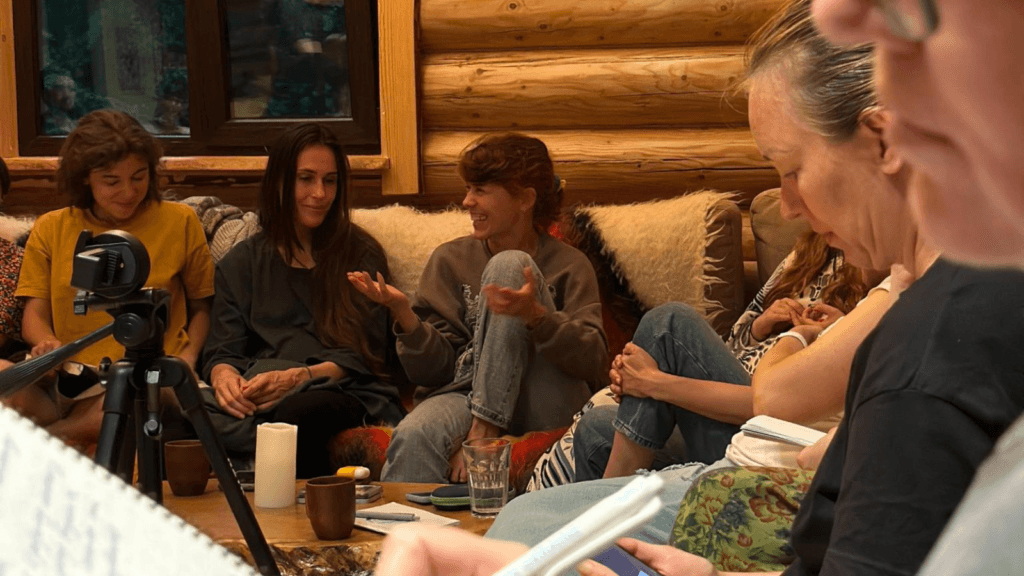
Trauma makes connection feel unsafe, so it is often the first thing people avoid. Yet recovery happens only in relationship, and the closeness that feels risky at first is precisely what makes it possible. A person who has been through something similar, and who is now able to self-regulate, co-regulate, and share how they managed to recover, can accompany another through the hardest stretches of that road in a way no method replaces. In an ongoing war and crisis setting, however, a conventional peer support group can go the wrong way: highly activated people advising each other, competing over horror stories, and slipping into dynamics that work against recovery. To make peer support healthy and genuinely supportive under these conditions, we built a model that is trauma-informed from the ground up.

Initial situation

Initial situation

War wears down the resource people recover with best: connection. Displacement, mobilisation and loss break apart the networks people used to rely on. Trauma pulls in the same direction, because a nervous system braced against threat keeps its distance and stays on guard. Building places where people can feel safe enough to engage with others is part of recovery itself.

The need for recovery support in Ukraine is enormous, and trauma-informed professional care cannot keep pace. Therapy is scarce, unevenly spread, and concentrated in the bigger cities, while demand keeps rising. People in rural and frontline communities have the least access of all.

Stigma raises another barrier. Seeking psychological help is still widely read as weakness, most of all among men. Many who carry heavy burdens will never go to a therapist. But they might sit down with others who have lived through the same thing, in a setting with no diagnosis and no patient role.

Peer support meets all three at once. It needs no clinician and no referral, so it reaches people and places professional care cannot. Its threshold is low and its groups know no hierarchy — no expert above, no one treated as broken — so joining asks nobody to admit weakness or accept a label. It brings people back into contact and helps rebuild community as it works. And because a regulated, safe presence helps others settle, a steady facilitator and a reliable group become a place where self-regulation and trust can take hold. Humanitarian standards count peer support among the core layers of psychosocial response in crisis. What has been missing is a version that carries its own stress and trauma literacy, designed for war conditions themselves, where people often arrive stuck in a strong defense response.
Our goal

Our goal

Our goal is communities that can carry their own recovery. Where war has scattered people and worn trust down, we want steady, healthy places to turn to, close to home — where people find company, co-regulation, and a way to look forward again. And we want this to last beyond us: a low-cost model that community members run, adapt, and sustain themselves, rather than one that depends on donors or outside experts.

How we help

How we help

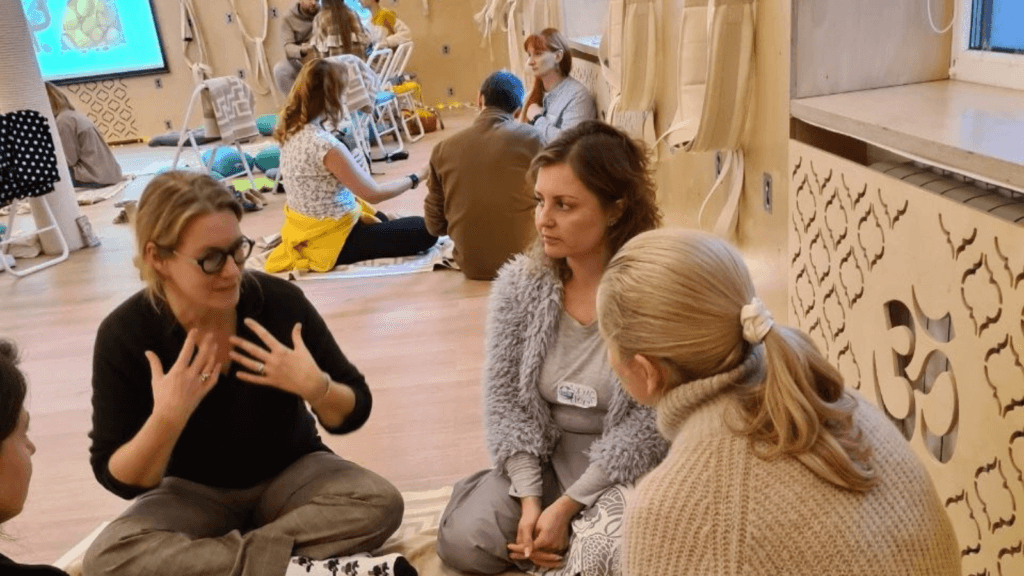
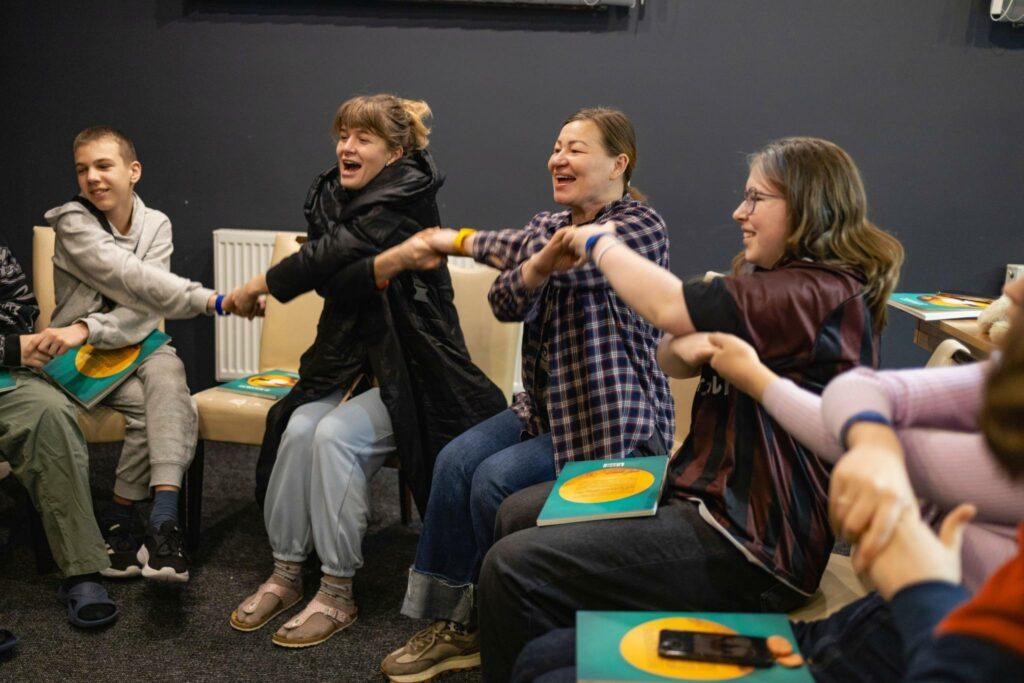
We developed our own trauma-informed peer support methodology, with an extensive facilitator manual and our comic I CAN! to accompany group participants. On the basis of this model, we train facilitators from local communities in basic stress and trauma literacy and in trauma-informed facilitation, so they can establish and hold groups that become places of safety, recovery, and development. Since 2024, together with our partner Somatic Experiencing Ukraine, we have been running trauma-informed peer groups across the oblasts of Kyiv, Chernihiv, Kharkiv, Sumy, and Zaporizhzhia, reaching displaced people, soldiers’ family members, bereaved relatives, volunteers, frontline community members, and people close to burnout.

Each group follows a clear, predictable structure that makes safety possible: psychoeducation on stress and trauma, body-based exercises for regulation, and guided sharing where no one is judged, advised, or corrected. Participants describe less anxiety and tension, steadier emotions, and a growing sense of safety, and the groups become places of trust and honest exchange.

The model is designed to outlast our involvement. Facilitators work from a manual they can adapt to their own group rather than a fixed script, and they receive ongoing supervision. Each trained facilitator can pass the approach on. “Each one, teach one” is how a scarce resource multiplies through the community itself.