
The sound of drones as soundtrack of childhood: Psychosocial support in frontline communities
Living in frontline proximity is not only highly dangerous – it also affects every aspect of children´s lives. It limits their opportunities to connect with peers, it eliminates all possibilities to roam freely and discover the world, and deprives them of nearly all other experiences that are a natural part of childhood.
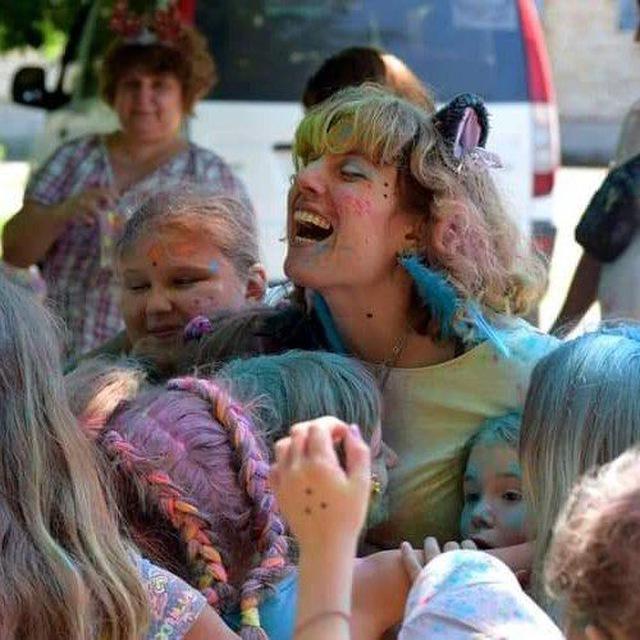
Kateryna Shutaliova
Psychologist with Somatic Experience Ukraine projects
I am Kateryna Shutaliowa, a psychologist who regularly visits children in communities close to areas where active fighting is taking place. I do this as part of the Terre des Hommes-supported project “Stress Relief and Trauma Prevention for Children, Adolescents and Caregivers Affected by the War in Ukraine – Phase II”, which we implement together with the local organisation Somatic Experiencing Ukraine.
From 2022 to 2024, I participated in the first three-year Somatic Experiencing training programme organised specifically for Ukrainians. I am now a certified SE practitioner and use this approach in my work with children, adolescents and caregivers affected by the war.
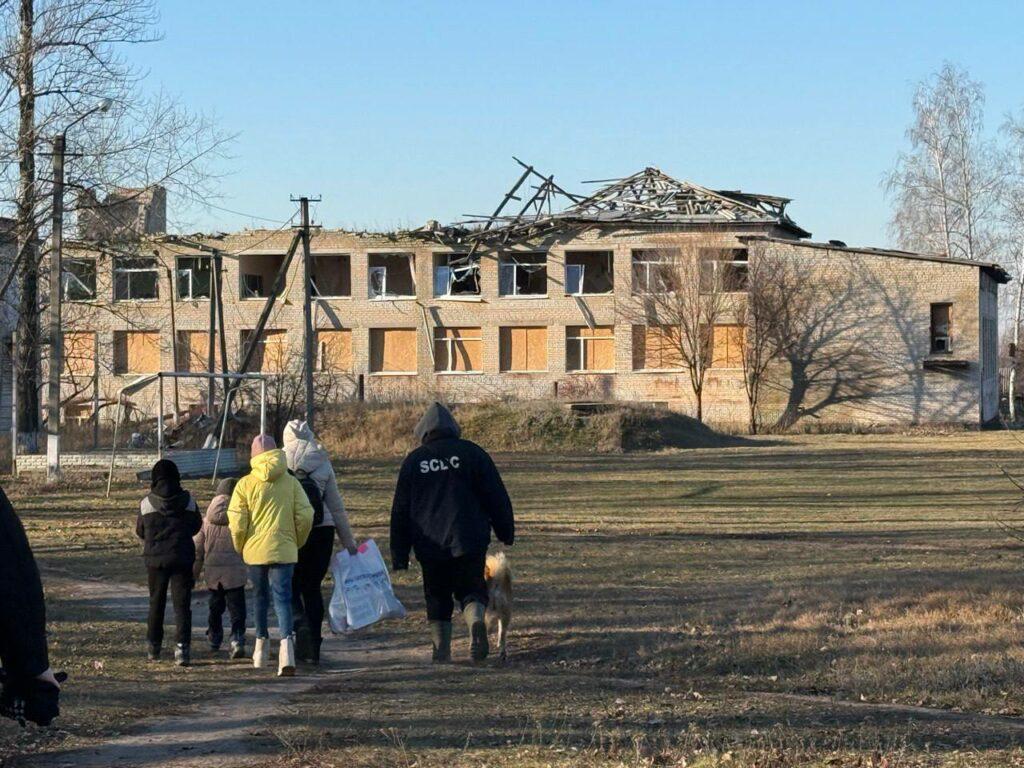
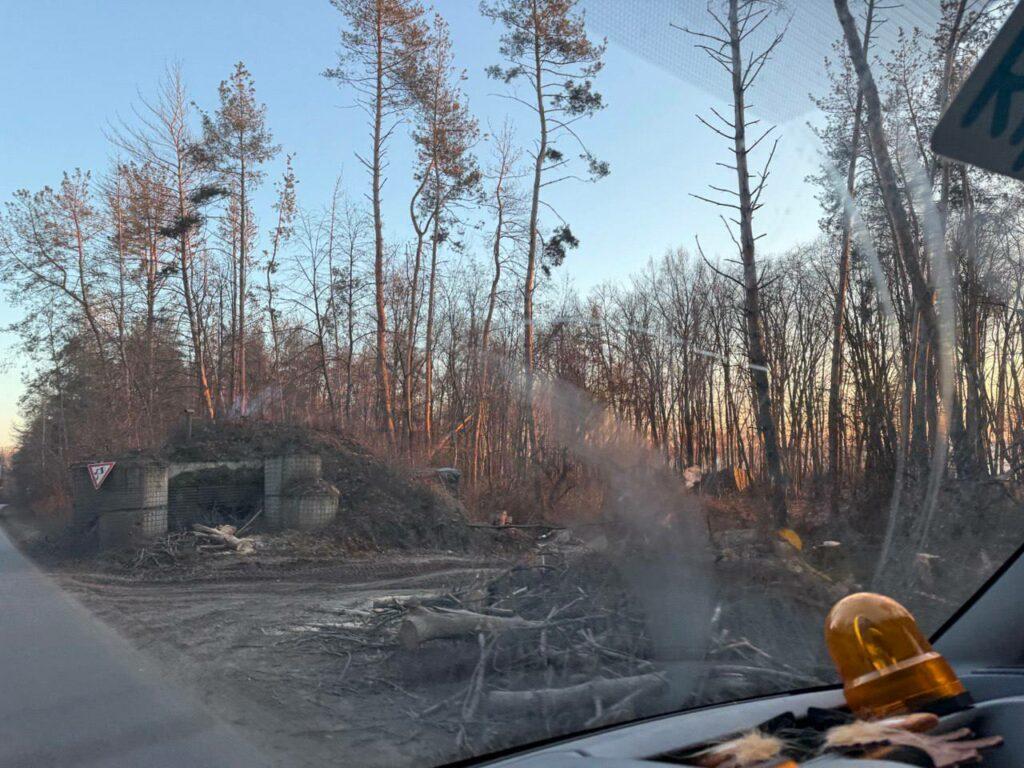
Today, I would like to tell you about my last two visits to Khotimlia, a village located only a few kilometres from the Russian border, in the region of Kharkiv. On its main road the sound of drones is almost constantly present. Here, war has become part of everyday life and every inhabitant: it is looming in the sky, felt in the tension among people, and visible in the ruined buildings and rubble.
The school and local administration building were destroyed by Russian shelling.The village has lost almost all of its public spaces. The local outpatient clinic is one of the only places where people can still gather. For children, the opportunity to play with peers and experience a few hours in a less activated and distressed environment has become a rare event.
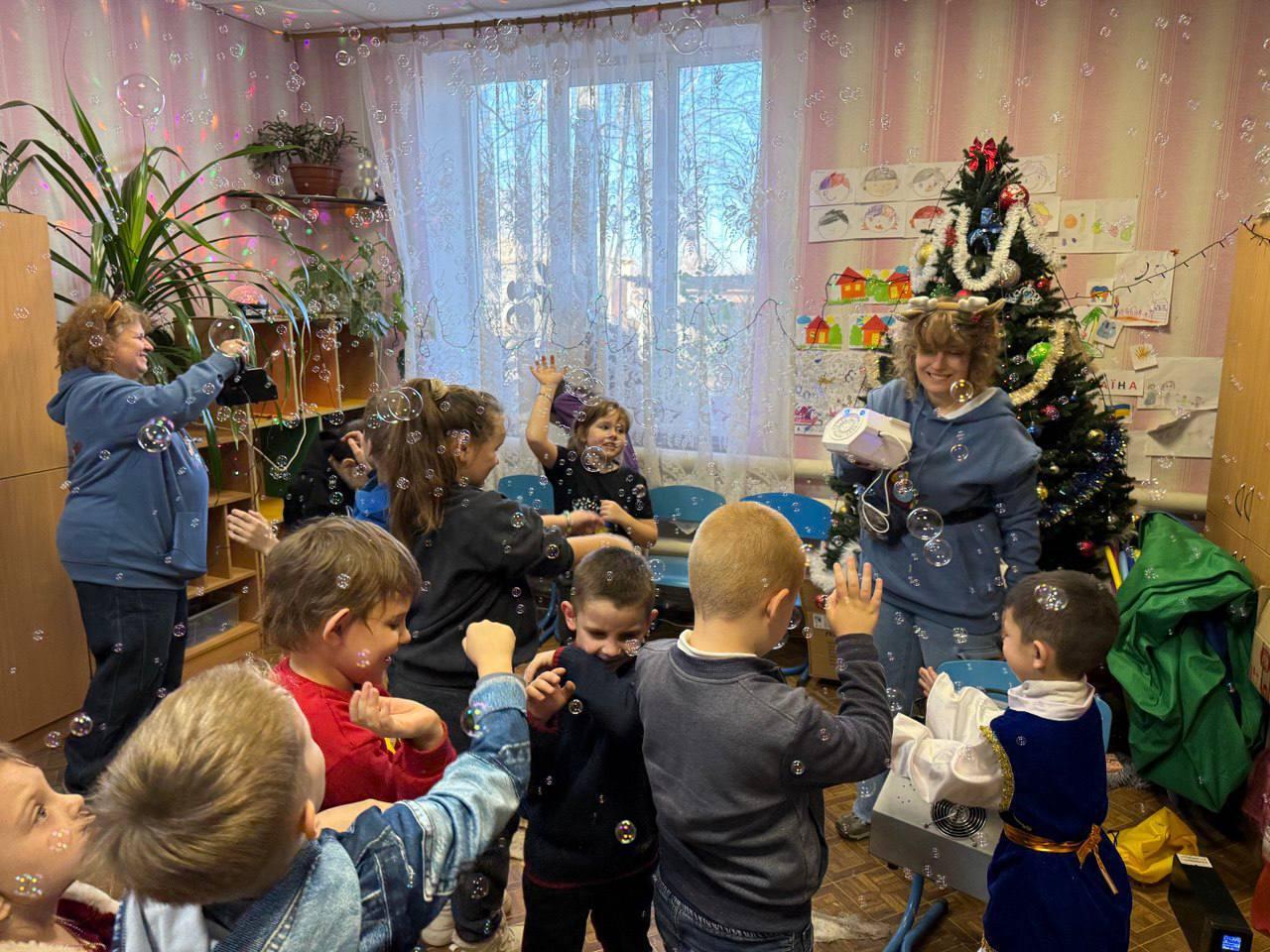
Together with volunteers from the “Reindeers of St. Nicholas” initiative, we packed some gifts and set out to Khotimlia, to hold two psychosocial playshops .
The first day: when even leaving home feels like a difficult decision
At the time of our visit, around fifty children were living in Khotimlia. Only some of them were able to attend the event. Some parents approached us to give their children gifts even when they do not participate in the playshop. “I’m afraid to let my child leave the house,” one mother told me.
These words capture the reality of life in a frontline community. Because of the ongoing danger, many children rarely go beyond their own yards.
This fact makes it even more necessary to organize spaces where they can meet and play, even if it is not free of risks.
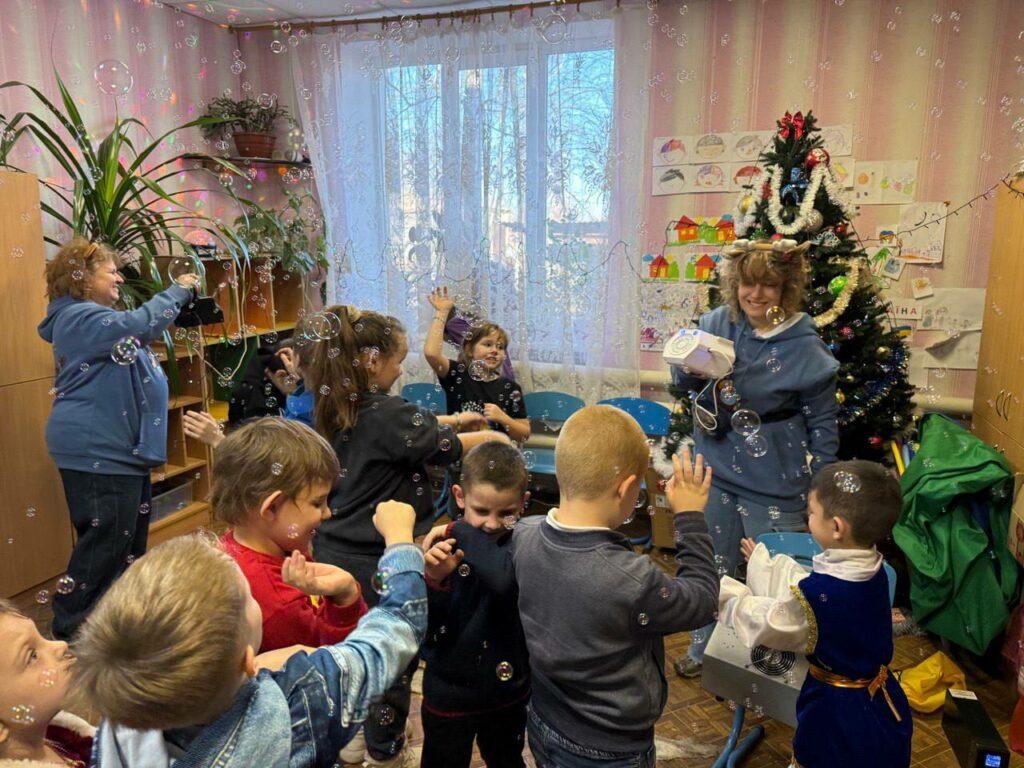
At the beginning of the event, the children, aged 5 to 9, were very excited and anxious at the same time. So we started working with them in small groups, doing movement exercises and body-based games. Gradually, they began to relax and trust each other more. It felt as if the whole place thawed.
The second day: when adults need to find their own stability first
The second day in Khotimlia began with an additional challenge. The situation near Staryi Saltiv had worsened and the crossing over the Siverskyi Donets River had become unsafe again, which promised a much more complicated journey back for the team.
For local residents, events like this are not only about transportation and mobility. The crossing is their connection to the rest of Ukraine and the outside world. When that connection is threatened, anxiety grows in the whole community.
Fotos aus der privaten Sammlung der Autorin
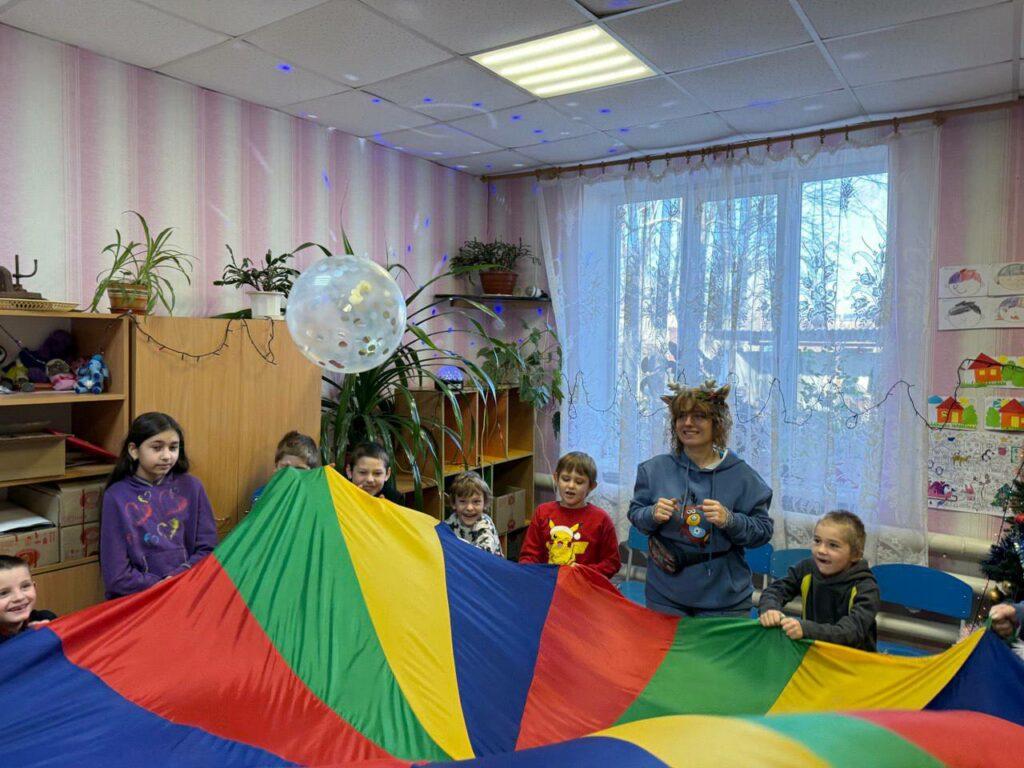
We felt this additional tension very much ourselves. So before starting the playshop, we paused, grounded ourselves, and supported one another. Once again, I was reminded of something essential: children respond not mainly to adults’ words, but to their emotional state. A child will hear an adult´s nervous system in distress always louder than the comforting and calming words they say. This is why we needed to self-regulate our nervous systems, before we could start working with the children.
This time, most participants were aged 10–11. In this age, they already understand much of what is happening around them, they hear adults’ conversations, and experience the war in their own way, trying to make sense of what is happening around them.
For this session, I changed into a polar bear costume and worked as a bear while my colleague Masha Suslova remained herself. We intentionally chose this format: through a safe and playful character, children could connect more easily, express emotions, and give themselves permission to play.
During movement games, the children threw soft “snowballs” at the bear, ran, laughed, and gradually released some of the tension they had been carrying. In this way, they could safely express emotions that had built up under the prolonged stress.
One of the most impressive moments for me was meeting two brothers who had lost their mother a few months earlier — she was killed by a Russian strike on their family’s yard. The boys came with their grandmother, who is now taking care of them. We had a brief conversation – how they are, how she manages. Moments like this cannot change what has happened, but they can help families feel that they are not facing their pain alone.Later, the boys joined the games with the other children. They laughed, interacted, and for a few hours were able to return to simply being a child — something every child deserves. By the end of the celebration, no one wanted to leave. And, as always, the bear received many big hugs.
Why this matters
Every such visit reminds me that psychosocial support is not only about activities or games. It is about creating moments of safety in places where safety itself has become fragile.
We cannot change the circumstances in which children from frontline communities live. But we can be present, help them process difficult emotions, and return some of what war has taken away from them: play, connection, trust, and the feeling that they are not alone.
It is through these small moments that inner resilience gradually grows — resilience that helps children continue developing and growing even alongside war.
We cannot change the reality these children live in. But we can help them process this reality and show them that war is not the only experience that shapes their lives – there is also humanity, togetherness and play.
Before puberty, a child’s emotional state is largely influenced by the adults around them. Adults help children regulate their emotions, cope with fear, and gradually regain a sense of stability. Yet in many frontline communities, adults themselves are living under constant stress, and some children do not have a person nearby who can consistently provide this kind of support.
That is why psychosocial support is so important. Through play, movement, and simple exercises, we help children gradually reduce tension and reconnect with a sense of safety. We proof to them that there are adults with regulated nervous systems on whom they can rely in the here and now. And we also work with their caregivers, adults around them, so they can learn to self-regulate better and provide children with the safety that comes not from words but from a stable nervous system and a regulated emotional state.
From
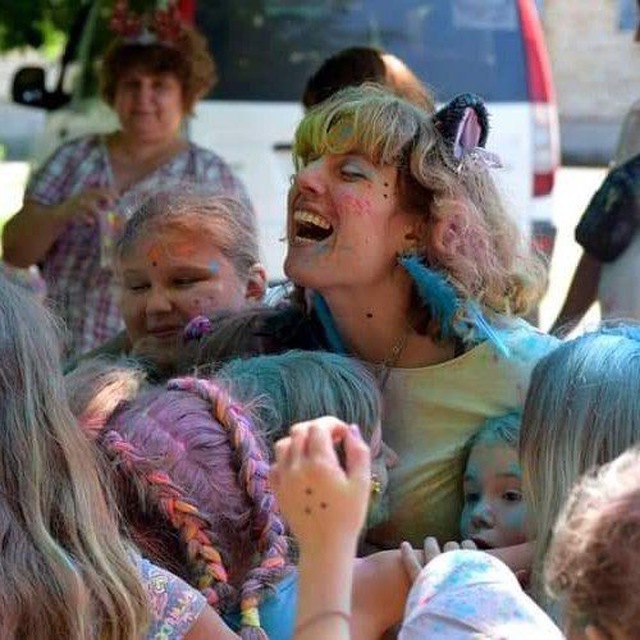
Kateryna Shutaliova
Psychologist with Somatic Experience Ukraine projects