
Return and Arrival
The teenagers’ pimped-up motorcycle roaring through the streets of Berlin could be a Shahed drone. The noises coming from the construction site resemble an explosion. Returning from Ukraine to Germany does not merely come with logistical baggage.

Ira Ganzhorn
Humanitarian Aid Officer
More than once have I found myself going through police reports on the Internet. A part of me knows that there was no explosion, that the city is not being bombarded. Yet, another part continues to be on high alert: What’s the fastest way outside? Where’s the safest hiding spot? Is the nearest metro station still reachable or is it too far away?
Each attack, every explosion happening in Ukraine deepens this rift.
I might be returning to Germany, but am I actually arriving?
When there’s helicopter noises, I look up to the sky and try to locate where it’s coming from. In the evenings of particularly bad days, I am able to tell the exact number of helicopters and planes that flew by.
Once, I even dragged a friend behind a wall – in Hamburg in broad daylight. Near us, there was a construction site, but my brain was unable to reconcile the noise with our surroundings and so I did what seemed to be the most reasonable thing: Bringing others and myself to safety.
Sometimes, I notice my friends’ worrying glances: When I flinch at loud noises or when I am searching the sky. At the start of the full-scale invasion, switching was easier, within a few hours, I was aware that I was safe and in Germany. In the fifth year of the war, it has become a lot more difficult. Several days or even weeks will pass before I get better.
Nightmares, sleepless nights and readiness are making life hard.
I am writing this text at half past one at night. On my nightstand, there’s a book about self-care in helping professions. I wonder if there’s plans for a book about survival in wartime?
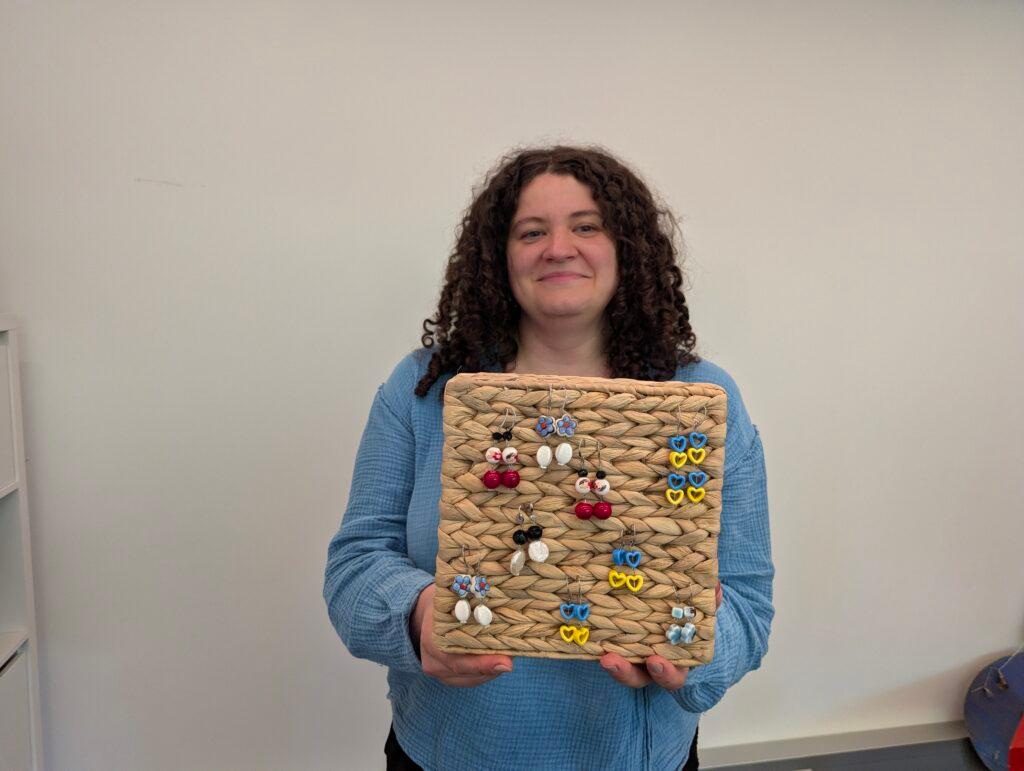
Foto aus dem LIBERECO-Büro
Active orientation is one of the pieces of advice I was given. So, sometimes, I will stand at a crossing in Berlin counting five yellow or five blue things. Five things I can hear, four things I can see, three things I can smell, two things I can taste and one thing I can feel – these strategies are part of my routine now.
At the same time, my conscience is bothering me. The Ukrainian poet Yevgeniy Breyger calls this the “endless staircase of shame”. We all feel shame before someone who is supposedly doing more than us. Civilians will feel shame before members of the armed forces, people abroad will feel shame before those who stayed in Ukraine, and thus, the staircase of shame continues endlessly.
So, why am I, here in Berlin, complaining about my fears?
On the one hand, there are people who spend their days in cities near the frontline or even in the trenches. On the other hand, there’s people who have never experienced such aggression, never heard explosions, never seen burning houses or children praying in air-raid shelters; people who do not have a last will, goodbye letter or instructions for their own funeral lying in a drawer nearby – who were never to be killed.
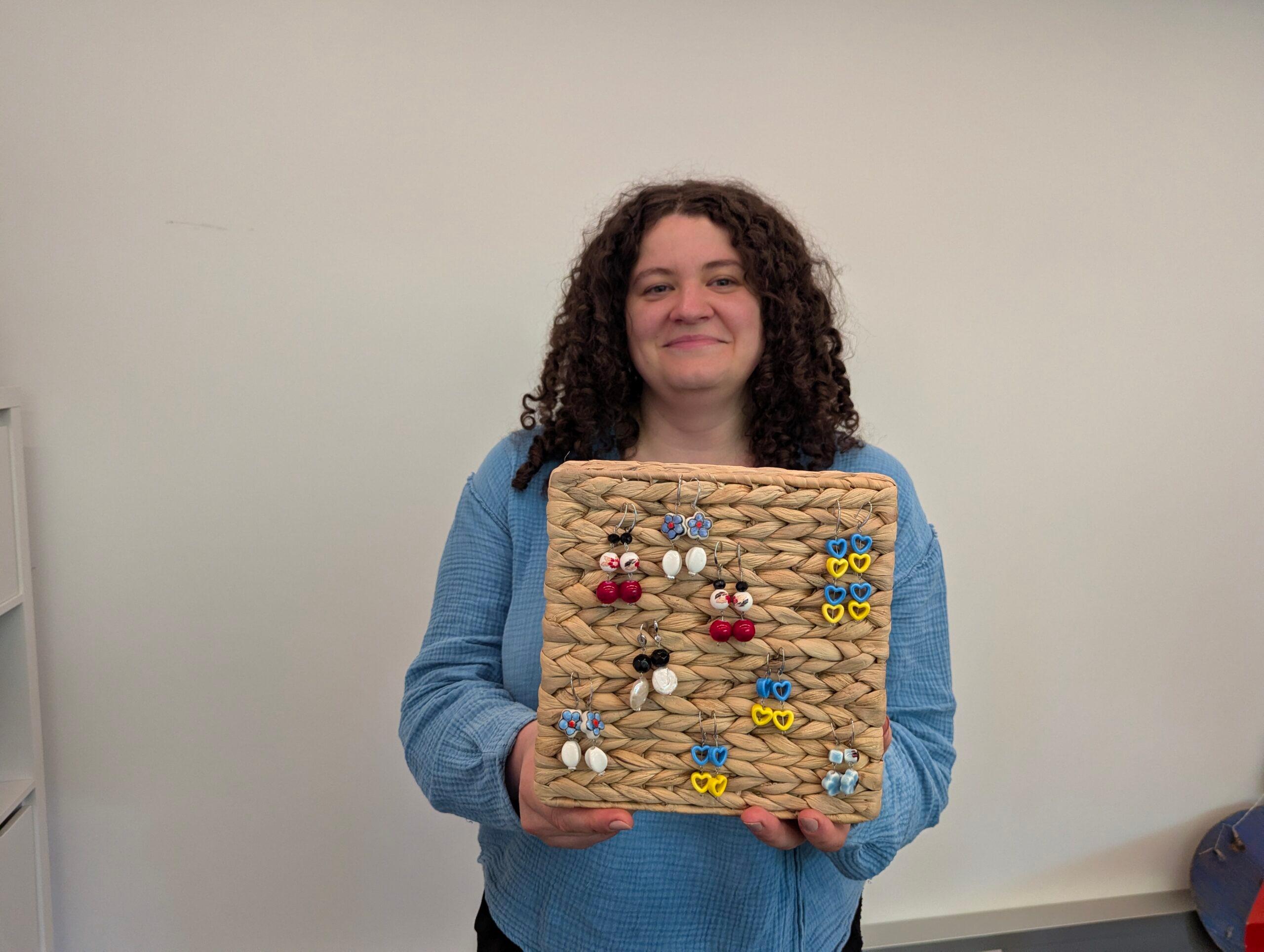
Writing, being creative, doing something with your hands – all these are good strategies for me.
I have already written three texts, crafted thirteen pairs of earrings and turned my apartment into a construction zone. After having survived an attack involving drones and ballistic missiles in Dnipro one day and having been evacuated from my train due to a drone attack the following day, my coping strategies have turned into flight mechanisms.
I am tracking the number of pages I read and the number of steps I take. I am trying to compensate for the loss of control by re-establishing control in other areas of my life. However, I am well aware that this won’t work for the security of my surroundings will not factor into my feelings. And behind the next corner, another jackhammer is already hammering away.
From

Ira Ganzhorn
Humanitarian Aid Officer