
A free Belarus is essential for peace and security in Europe
I spent more than seven years in Lukashenko’s prisons, but I know that the Belarusian people have not given up their fight for freedom. Our struggle is not only about the future of Belarus — it is also about peace, democracy and security in Europe. Why must the democratic world remain united, and what is at stake if it fails to act?
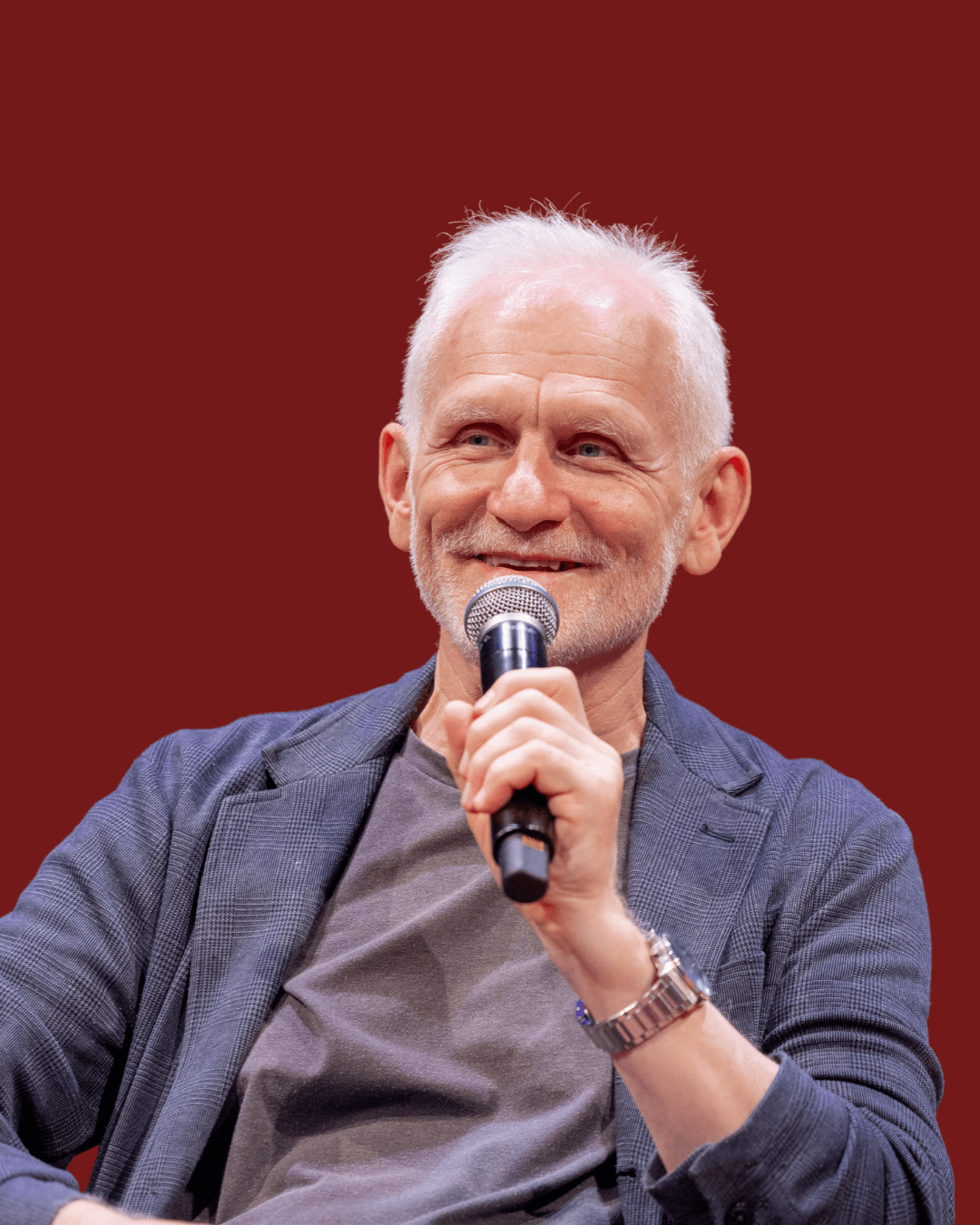
Ales Bialiatski
Nobel Peace Prize laureate and Belarusian human rights defender
To look confidently towards the future of Belarus and Europe, we must first look back at the past.
In the early 1980s, my like-minded friends and I dreamed of a democratic and independent Belarus. We challenged the Soviet empire, and in 1991, Belarus regained its independence. But the forces of reaction returned. For more than 30 years, Belarus has been ruled by a dictatorship, and defending human rights has become my life’s mission.
We have learned that democracy and independence are never guaranteed forever. Every generation must defend them.
Today, we are witnessing a clear confrontation between good and evil. To stand with Belarusians who oppose the dictatorship, just as we stand with Ukrainians defending themselves against Russian aggression, is to stand on the side of good.
Belarus is not Lukashenko
I spent more than seven years in Lukashenko’s prisons. During that time, I witnessed the extraordinary courage of ordinary Belarusians. I saw young people who refused to abandon their belief in freedom, even though they knew the price they might have to pay.
Belarusian society has not accepted dictatorship. The spirit of the peaceful revolution of 2020, when hundreds of thousands took to the streets against electoral fraud and for a democratic, European Belarus, is still alive.
Belarus and its people must not be confused with Alexander Lukashenko, who lost the 2020 presidential election.
His regime is responsible for the killings, beatings and torture of peaceful protesters, the arbitrary imprisonment of thousands of Belarusians and the forced exile of hundreds of thousands of my fellow citizens.
The regime also bears responsibility for its complicity in Russia’s imperial war against Ukraine. I want to emphasise that Belarusian society overwhelmingly opposes this war and does not share Russia’s imperial ambitions.
It is impossible to separate Lukashenko from Putin and turn him into a guarantor of Belarusian independence. That would contradict the very nature of his regime.
Lukashenko is systematically destroying Belarusian culture, language and identity. He has made Belarus increasingly dependent on Putin’s Russia, turning our country into an instrument of hybrid warfare against Ukraine and Europe.
Hope must be accompanied by a clear strategy
Authoritarian systems are built on fear. Human rights defenders draw their strength from hope.
But hope alone is no longer enough. We need a strategic vision, and that vision must be clear: there can be no alternative to a free, democratic and European Belarus.
It is naive, and sometimes dangerous, to bargain with dictatorships in the hope of obtaining meaningful concessions. Dictators such as Putin and Lukashenko interpret an extended hand of compromise as a sign of weakness.
We are witnessing the emergence of a global alliance of dictatorships. This makes cooperation between democratic governments, politicians and civil society organisations around the world more important than ever.
Democracies must remain united, both across the Atlantic and globally.
Sanctions work, but repression continues
Dictatorships respond to consistent, principled policies, including sanctions.
The sanctions imposed on Lukashenko’s regime helped American diplomacy secure the release of several hundred political prisoners, including myself. The authorities exchanged our freedom for the lifting of certain sanctions.
But while some prisoners were released, new people were arrested. One of my lawyers ended up taking my place behind bars.
Repression in Belarus has not stopped. There are no signs that it is coming to an end.
The persecution of citizens has become a routine part of the political system. Around a thousand political prisoners remain in Lukashenko’s prisons.
Independent civil society and media have been systematically dismantled. The Belarusian language is being marginalised in favour of Russian, while Russian-Soviet interpretations of history are being imposed.
Civil society organisations, independent media outlets, publishers and educational initiatives are labelled “extremist” or even “terrorist”.
We must remember why sanctions were introduced in the first place.
They were imposed in response to serious human rights violations in Belarus, the regime’s complicity in Russia’s war of aggression against Ukraine, including the forced transfer of Ukrainian children, and hybrid attacks against neighbouring European Union countries.
None of these violations has stopped.
Gallery
Supporting Belarusian democracy is an investment in European peace
More than 230 years ago, the German philosopher Immanuel Kant developed his vision of perpetual peace. He argued that states founded on freedom and democratic principles are less likely to wage war against one another.
Supporting democratic aspirations, including the struggle of Belarusians against dictatorship, is therefore an investment in future stability and peace throughout Central and Eastern Europe.
We Belarusians feel the solidarity of German society and the German state.
We are grateful that Germany continues to draw attention to the situation in Belarus, supports the country’s democratic future and speaks out against the human rights violations committed by the Lukashenko regime.
We particularly value Germany’s political, moral and practical assistance to Belarusians who stand for freedom.
This includes assistance and rehabilitation programmes for political prisoners and victims of repression who have been forced into exile, as well as institutional and direct support for Belarusian civil society organisations and independent media.
Supporting Belarusian science and culture is also strategically important at a time when our national identity is under sustained pressure.
We hope these programmes will continue and expand. We also hope that practical problems faced by Belarusians in exile, including difficulties obtaining legal residence and documentation, will be addressed.
The struggle for human rights goes beyond Belarus
The struggle for democracy and human rights in Belarus is part of a global struggle for human dignity.
Belarusians are paying a high price for this struggle, just as Ukrainian soldiers and civilians are paying with their lives every day to prevent the Russian army from advancing further towards the borders of the European Union.
The future of peace, freedom and justice in our region depends on the resilience of Ukraine, the unity of the democratic world and the future of Belarus.
Across Eastern Europe, the South Caucasus and Central Asia, human rights defenders face physical attacks, long prison sentences, killings and forced exile.
Thousands of political prisoners remain behind bars in Russia, Belarus, Azerbaijan and other countries. Their freedom is cynically used as a bargaining chip.
According to the human rights project Political Prisoners. Memorial, at least 5,828 people have been imprisoned for political reasons in Russia and the occupied territories of Ukraine. This is a minimum estimate, and human rights defenders believe the actual number could be at least twice as high.
In Belarus, at least 1,000 political prisoners remain behind bars. Nine have died in captivity.
These numbers continue to rise, while the number of people able to defend political prisoners is decreasing.
Independent lawyers and human rights defenders are being harassed, arrested or forced into exile.
We must change the system, not simply negotiate releases
Germany and the European Union must maintain a principled and consistent approach to sanctions, with clear conditions for achieving lasting, systemic change.
They must insist on ending the criminalisation of human rights work and peaceful civic activism.
Otherwise, every released political prisoner risks being replaced by another imprisoned activist.
This has happened twice in my own case. Two of my lawyers were also convicted after representing me. And although I was eventually released, like many others, I was forced into exile.
The release of individual prisoners is important. But it cannot be the final goal.
We must work to change the system itself.
Our aim must be a society in which freedom, dignity and human rights are no longer exceptions that need constant protection, but the very foundations on which society is built.
I believe in the love of freedom among Belarusians. And I believe in the solidarity of free people throughout Europe and the world.
From
Ales Bialiatski
Nobel Peace Prize laureate and Belarusian human rights defender