
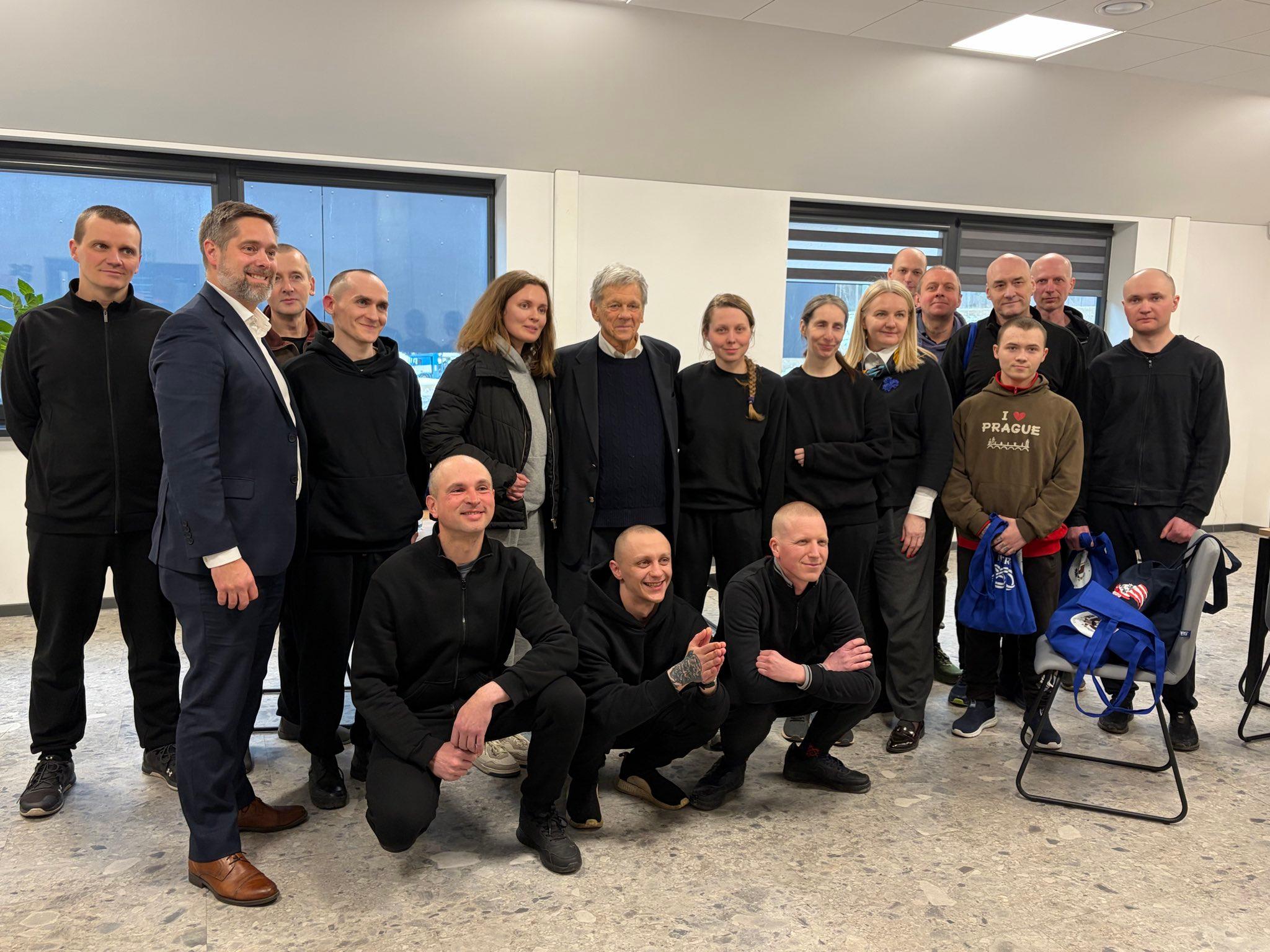
250 political prisoners released
On Thursday, the largest mass release of long-term political prisoners in the history of independent Belarus took place.
On March 19, dictator Alexander Lukashenko pardoned 250 political prisoners, as reported by the Belarusian Human Rights Center Viasna.
Among those released are human rights defenders Marfa Rabkova, who coordinated Viasna’s volunteer network; Valentin Stefanovich, deputy chair of Viasna and vice president of the International Federation for Human Rights (FIDH); and the founder of the human rights organization Human Constanta, Nasta Loika. Also released from detention were Belsat TV journalist Katsiaryna Bakhvalava (Andreyeva) and blogger Eduard Palchys.
Fifteen of those released were deported to Lithuania on Thursday, while all others remained (for the time being) in Belarus.
Forced from Prison into Exile
Like hundreds of political prisoners released in the past, those recently freed have also been forced to leave Belarus. Arriving in exile after deportation and building a new life takes a great deal of strength and resources. Many former prisoners find themselves destitute at first—without housing, without healthcare, and without legal or psychological support.
Since 2020, thousands of Belarusians have risked their freedom to stand up for democracy, human rights, and a life of dignity. Many of them paid for their determination with years of imprisonment; quite a few were mistreated or tortured.
To process traumatic experiences and lead a normal life, former political prisoners rely on psychosocial support. However, the government does not provide them with adequate treatment. That is why LIBERECO is committed to the mental and physical rehabilitation of victims of state violence in Belarus and works to promote the long-term health of those affected.
Background to the recent mass release
On March 19, U.S. President Donald Trump’s special envoy, John Coale, met with Alexander Lukashenko in Minsk to negotiate the release of political prisoners. As a result, Lukashenko pardoned 250 people. In return, the U.S. government lifted sanctions against two Belarusian banks and the Ministry of Finance, as well as two fertilizer manufacturers. Mass releases had already taken place during Coale’s previous visits. Nevertheless, according to Viasna, well over 1,000 political prisoners remain incarcerated in Belarus.